
.png) 2 hours ago
1
2 hours ago
1
Across Africa, millions of households still cook with charcoal, wood, or agricultural waste, and the International Energy Agency says this reliance on traditional fuels has had serious consequences.
Beyond carbon emissions, severe indoor air pollution, which the World Health Organisation links to hundreds of thousands of deaths annually, has become the order of the day.
Women and children bear the brunt, spending hours near smoke-filled kitchens while collecting firewood.
Interestingly, modern cookstoves were built as a solution to this appalling situation. They burn fuel more efficiently or replace it entirely, reducing emissions, saving time, and lowering health risks.
But there’s still a huge challenge, which is price. For households living on just a few dollars a day, even a stove costing $30 can be unaffordable.
This brings us to carbon finance, where assigning financial value to the greenhouse gas reductions achieved by clean cooking technologies enables carbon markets to create a revenue stream that can subsidise the cost of stoves.
For some households, this turns a $40 appliance into something closer to $5. The mechanics are solid, emissions reductions are verified, converted into carbon credits, and sold to buyers globally, usually corporations seeking to offset their own carbon footprint. The income flows back into the project, reducing retail prices and scaling adoption.
Carbon Markets are a Fast-Growing Financial Sector
Carbon markets have expanded over the last decade and currently, 113 national and subnational carbon pricing mechanisms cover approximately 28% of global greenhouse gas emissions, raising over $100 billion annually. Voluntary markets add billions more.
Africa, however, still lags behind, currently accounting for less than 2% of global carbon credits, despite enormous potential in forestry, renewable energy, and land-use projects.
To close that gap, initiatives like the African Carbon Markets Initiative, launched at COP27, aim to generate 300 million carbon credits annually by 2030 and 1.5 billion credits by 2050, bringing $120 billion in economic value and supporting 110 million jobs.
In Nigeria, the carbon finance sector is coming up. In January 2026, the country formally launched its Carbon Market Framework at Abu Dhabi Sustainability Week, projecting $30 billion in annual climate-related investments.
The National Council on Climate Change will implement trading regulations, ESG disclosure reforms, and blended-finance structures, pointing to a more powerful ecosystem for carbon finance and green industrialisation.
Why Cooking is Indispensable to Climate Action
Clean cooking is rarely a topic of discussion, but it sits at the intersection of climate, health, and development.
Traditional biomass cooking is both a deforestation driver and a public health hazard. Households consume large amounts of wood and charcoal, increasing carbon emissions.
Smoke-filled kitchens exacerbate respiratory diseases, cardiovascular issues, and child mortality. Again, families spend a substantial portion of their limited income on fuel, while women and girls spend hours collecting firewood.
Modern stoves reduce fuel consumption by 50–70%, drastically cut emissions, and save households time and money. For climate-conscious investors and governments, this creates a huge opportunity, supporting clean cooking, which addresses emissions and also improves livelihoods.
The Price of the Counter: How Carbon Finance Lowers Stove Costs
Manufacturing a modern cookstove involves expenses, including materials, design, safety features, and logistics. To households with minimal daily income, these costs are prohibitive, but carbon markets bridge the gap.
When a stove reduces emissions, project developers can certify those reductions as carbon credits. These credits are sold on international markets to buyers, companies or governments needing offsets. Revenue from these sales is then used to subsidise stove prices, sometimes reducing them by as much as 60–90%.
This model explains why a stove costing $40 at the factory might sell for $5 to a household in Kenya, Nigeria, or Malawi. It’s not charity, it’s finance applied to climate action, converting environmental impact into affordability.
BURN Manufacturing: Scaling Clean Cooking Across Africa
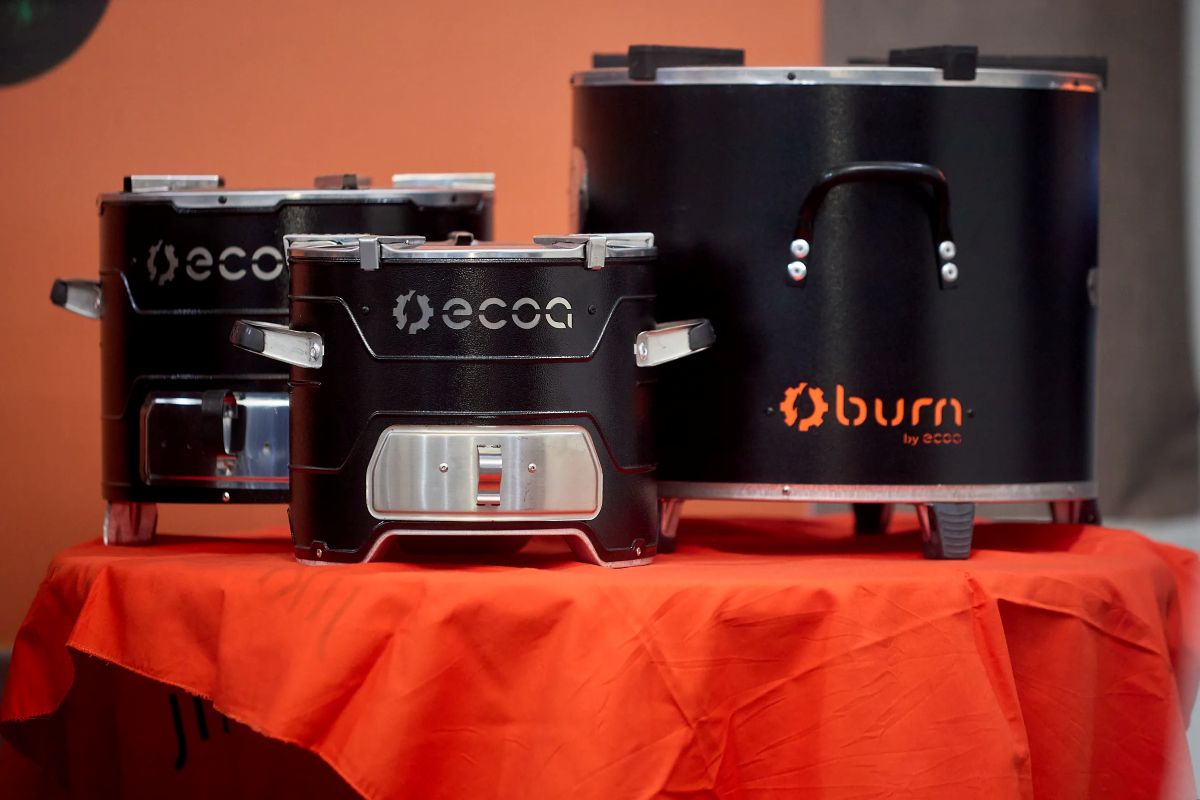
Among the companies leveraging this approach, BURN Manufacturing has a niche around inclusion, standing out in the space.
Founded in 2011 and headquartered in Nairobi, BURN has become one of Africa’s largest manufacturers of clean cookstoves and a developer of carbon projects. The company has sold over five million stoves, reaching more than 27 million people across the continent.
BURN’s appliances include biomass stoves, LPG cookers, and electric induction stoves. The company goes beyond manufacturing to generate certified carbon credits from its projects.
These credits lower the costs of the stove for households while ensuring emissions reductions are verifiable and reportable.
BURN’s model ascertains how climate finance can scale impact without depending solely on donor funding. In combining commercial operations with carbon credit revenue, the company ensures that clean cooking technologies reach communities that need them most.
In total, BURN’s projects have avoided tens of millions of tonnes of carbon emissions and saved millions of tonnes of wood.
Beyond Affordability: Economic and Environmental Impacts
The function of carbon finance in clean cooking is far beyond lowering stove prices. In providing reliable revenue streams, it enables companies to:
- Expand production capacity and build industrial-scale manufacturing facilities.
- Invest in research and development for next-generation stoves.
- Create jobs across manufacturing, distribution, and project monitoring.
BURN, for instance, produces stoves at a scale that can reach thousands of households daily. Digital monitoring and mobile payment technologies now track stove use and verify emissions reductions, ensuring the integrity of carbon credits and maintaining buyer trust.
At the household level, modern stoves reduce time spent collecting fuel, lower monthly expenditures on charcoal or wood, and improve indoor air quality.
Communities experience less deforestation, while women and children benefit most directly from safer kitchens and reduced workload.
Challenges in Carbon Markets
Despite the benefits, we can’t ignore the challenges in carbon markets. Verification accuracy, especially in voluntary markets, is one issue highly talked about. Some projects have been accused of overstating emissions reductions, creating “phantom credits.”
In response, standards are getting tougher. High-integrity credits now require robust monitoring, reporting, and verification systems, including real-time sensors and independent audits.
Companies that adapt to these standards, like BURN, gain credibility in the global market while ensuring tangible local impact.
Africa’s Growing Carbon Market
Africa’s role in global carbon finance is already expanding. Beyond clean cooking, carbon markets support renewable energy, forestry, and land-use projects.
Nigeria’s Carbon Market Framework and regional initiatives like ACMI are creating infrastructure for transparent, scalable carbon trading. Investors are starting to see Africa as a viable source of carbon credits, capable of attracting billions in climate finance.
If implemented effectively, these frameworks can transform clean cooking into a commercially sustainable industry, rather than a donor-dependent initiative. Companies that align with these policies will help in connecting climate finance to households.
The Human Impact
All the policy documents, frameworks, and market statistics are important, but the ultimate impact is human.
Cleaner stoves mean fewer hours collecting firewood, less smoke in kitchens, and improved household health. Children breathe cleaner air, women spend more time on income-generating activities, and families spend less on fuel.
In some communities, switching to modern stoves reduces wood consumption by tons per year, helping protect local forests. In aggregate, these changes add up to essential climate and development results.
The Sustainability of Clean Cooking
The clean cooking sector is highly dynamic, with innovations like electric induction stoves, powered by renewable energy, that could eventually eliminate cooking emissions in regions with reliable electricity.
Carbon markets will likely remain a key enabler, providing financial incentives to scale adoption.
Across Africa, governments, companies, and international buyers need to work together to maintain transparency, ensure accountability, and channel capital efficiently.
The sustainability of this sector depends on strong regulation, accurate measurement, and reliable reporting systems.
BURN’s success has shown that this is possible. Having integrated manufacturing, distribution, and carbon finance, the company offers a model for how clean cooking can be scaled effectively.
So why do some stoves cost less?
It can’t be called luck or charity, because it is climate finance in action. Carbon markets convert emissions reductions into revenue that subsidises clean technology.
We see the impact with companies like BURN Manufacturing, millions of stoves distributed, emissions avoided, and households benefiting.
However, clean cooking is a test case for whether climate finance can improve everyday life while addressing a global challenge. In millions of African homes, that difference is tangible, cleaner kitchens, safer children, and a small but significant step toward a sustainable environment.
Sometimes, the most impactful climate solution is not a massive solar farm or a battery factory, but a better stove, and a market willing to pay for the difference.
The post From $40 to $5: How Carbon Finance is Subsidising Africa’s Clean Cooking Revolution appeared first on Tech | Business | Economy.