
 3 hours ago
1
3 hours ago
1
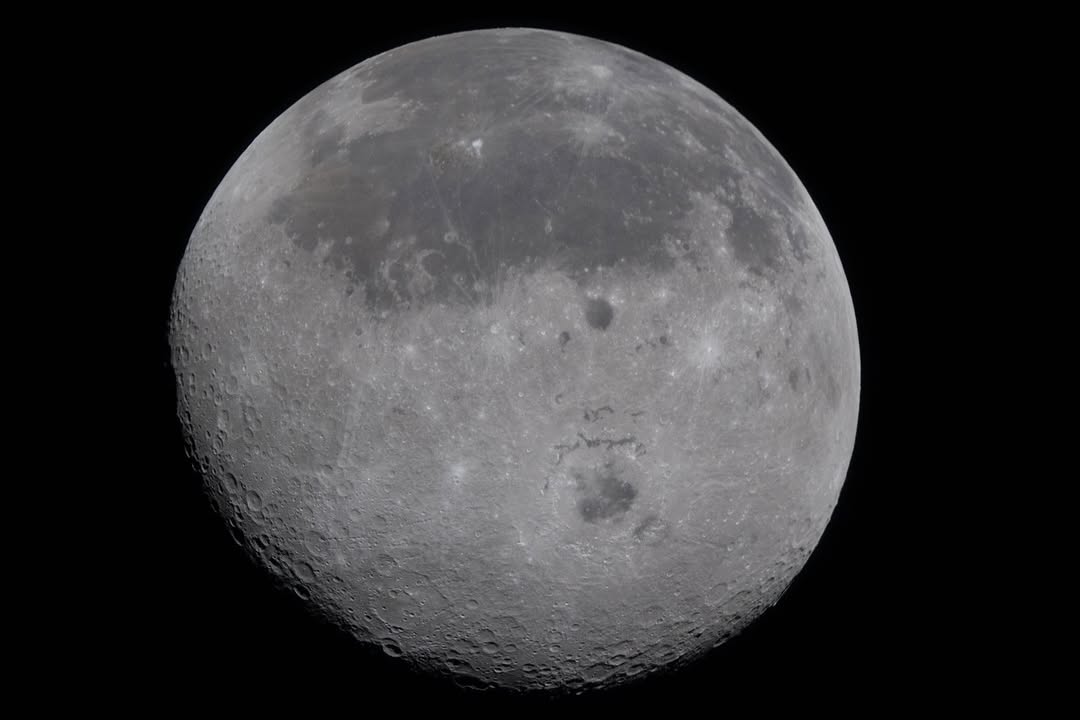
This view, taken as Artemis II surpassed the Apollo 13 distance record, captures the transition between the Moon’s hemispheres. The 600-mile-wide Orientale Basin is visible at the boundary where the crew proposed naming a feature “Carroll”—a tribute that will be visible from Earth during the lunar transit. Photo Credit: NASA Artemis/Instagram
It is a historic week for humanity as the Artemis II mission reaches its most significant milestone yet. On Monday, 6 April 2026, the crew of four astronauts officially ventured further into space than any human being in history, surpassing a record that has stood for over half a century. At precisely 1:57 p.m. EDT (1757 UTC), the Orion spacecraft, named Integrity, broke the distance record previously held by the Apollo 13 mission since 1970. While the Apollo crew reached 248,655 miles from Earth, the Artemis II team pushed that boundary to approximately 252,756 miles, watching the Moon grow larger and larger in their windows as they geared up to observe the lunar far side.
This record-breaking feat comes just days after the Artemis II crew captured images of Earth from space during their initial departure, offering a final, breathtaking look at our home planet before they transitioned into deep space. Now, with Earth appearing as a distant, “muted blue” marble, the focus has shifted entirely to the lunar surface.
The view from the spacecraft has been nothing short of spectacular, with the crew making their closest approach of roughly 4,067 miles above the lunar surface around 7:00 p.m. EDT. Looking out through the long lens and with the naked eye, the astronauts observed the Orientale Basin, a massive 600-mile-wide crater that straddles the edge of the Moon’s near and far sides. This unique vantage point allowed them to see ancient lava flows and the hemisphere that remains hidden from Earth, providing a moment of profound reflection for the crew as they witnessed an “Earthset” before emerging back into communication range.

Captured at 6:41 p.m. EDT on 6 April 2026, this “Earthset” mirrors the iconic 1968 Apollo 8 “Earthrise.” It was taken as the Artemis II crew reached a historic 252,756 miles from Earth, officially surpassing the record held by Apollo 13. Photo Credit: NASA Artemis/Instagram
In a deeply moving update sent back to Earth, the crew shared that their science team had helped identify a couple of relatively fresh, unnamed craters for which they wished to propose potential names. For this close-knit astronaut family, the moment was especially meaningful. They proposed naming a feature in a “really neat place” on the Moon—situated right on the boundary of the near side and far side—”Carroll.” The name honours the late wife of mission Commander Reid Wiseman, Carroll Taylor Wiseman, who passed away in 2020. Because of its specific location, the crew noted that at certain times during the Moon’s transit around Earth, the crater will actually be visible to those of us looking up from home.
The weight of this achievement was recognised shortly after the flyby when the crew received a congratulatory call from President Donald Trump. During the live broadcast, the President noted that the crew had made the country incredibly proud and extended an invitation for Reid Wiseman, Victor Glover, Christina Koch, and Jeremy Hansen to visit the Oval Office upon their return. While the International Astronomical Union (IAU) is the official body responsible for naming lunar features, the provisional designation of “Carroll” follows a long tradition of astronaut-named landmarks, like Mount Marilyn, eventually becoming part of our permanent lunar map.
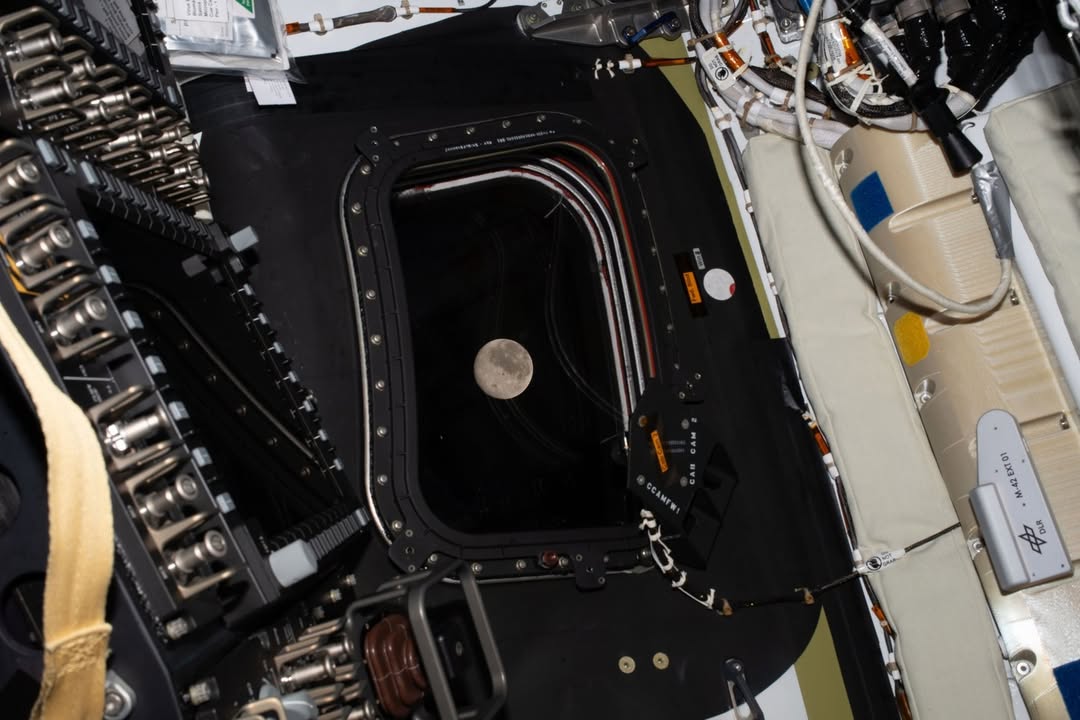
The Moon seen through a small circular porthole from the interior of the Orion spacecraft cabin. Photo Credit: NASA/Instagram
As the Orion spacecraft now exits the lunar sphere of influence, it has begun its four-day “free-return” journey home, using the Moon’s gravity to naturally sling the capsule back towards our atmosphere. The mission is scheduled to conclude with a splashdown in the Pacific Ocean this Friday, 10 April 2026.
The post Historic! Artemis II Crew Smashes 50-Year Moon Record & Names Lunar Crater “Carroll” in Moving Tribute appeared first on BellaNaija - Showcasing Africa to the world. Read today!.