
.png) 2 hours ago
1
2 hours ago
1
Africa has officially emerged as the fastest-growing FinTech market globally, with revenues projected to expand 13-fold to approximately US$65 billion by 2030.
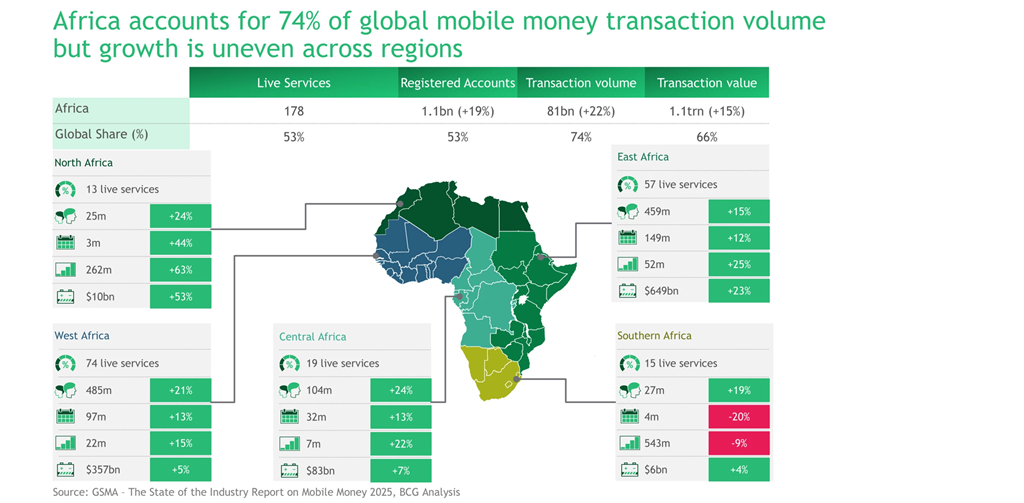
While the continent already accounts for 74% of global mobile money transaction volume, new analysis shows that the next stage of growth will be defined less by transaction scale and more by financial depth, institutional design, and long-term investment readiness.
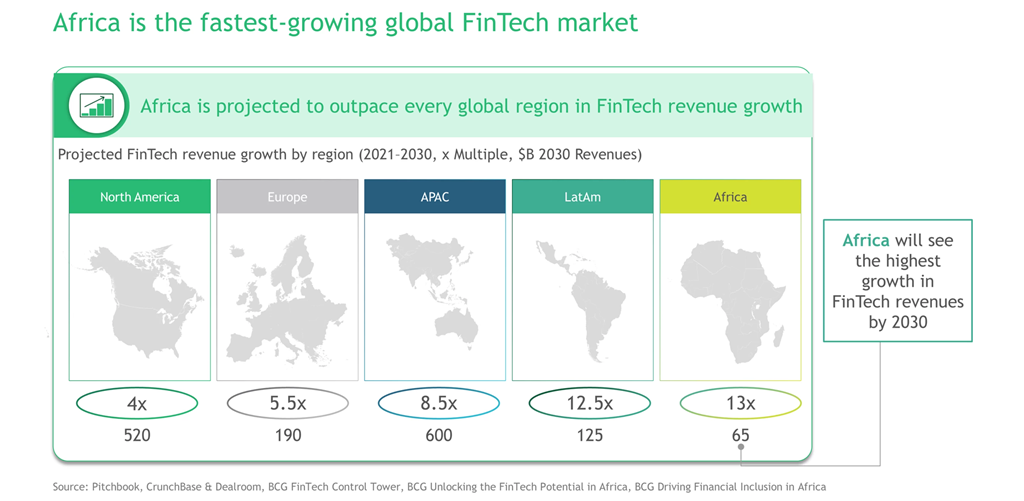
Launched around the Inclusive FinTech Forum (IFF) in Kigali, a forum increasingly recognised by regulators, financial institutions and investors as a convening point for Africa’s financial architecture, the report Beyond Payments: Unlocking Africa’s Second FinTech Wave from Boston Consulting Group (BCG) examines how the continent is shifting from transactional inclusion to scalable, infrastructure driven financial systems.
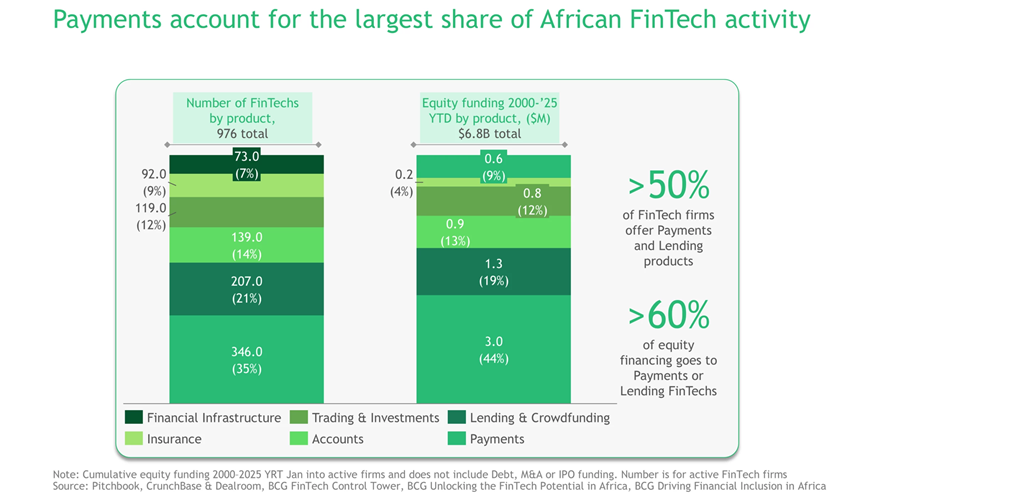
While the first wave of African FinTech successfully built domestic payment rails with over 40% of adults in Sub Saharan Africa now using mobile money, the report finds that even in advanced markets, more than 50% of lending still occurs through informal or semiformal channels.
This gap has sharpened the focus on B2B payments, government digitisation, interoperable credit rails, and data driven underwriting as the engines of the second wave.
Africa has already built scale in digital finance. The opportunity now is to convert that scale into sustained, institutional-grade growth.
Markets offering regulatory clarity, interoperable infrastructure, and predictable operating conditions are becoming increasingly attractive to long term‑ capital.
Across parts of the continent, these conditions are taking shape, driving a step change in ‑long-term institutional capital interest beyond ‑early-stage‑ FinTech plays.
The report highlights Rwanda as an example of deliberate institutional coordination that directly lowers the cost to scale for financial institutions.
Supported by forward looking regulation, interoperable digital public infrastructure, and a clear cross border orientation, the country has positioned itself as a focal point for ecosystem alignment across East Africa.
Recent initiatives, including the Licence Passporting Memorandum of Understanding between Rwanda and Kenya, are cited as practical steps toward lowering the cost to scale for financial institutions, easing regional expansion, and improving cross border payment and credit flows.
Financial centres like the KIFC play a critical role in Africa’s next phase of FinTech growth. By combining regulatory clarity, coordinated infrastructure, and Pan African integration, they materially reduce uncertainty for banks, FinTechs, and investors, and help position markets into credible, long-term investment destinations.
As African FinTech ecosystems mature, the report notes a growing shift from consumer peer to peer models toward infrastructure grade opportunities aligned with bank balance sheets, development finance institutions, and long duration private capital.
Interoperable payment switches, AI enabled credit models, open banking reforms, and clearer licensing regimes are reducing fragmentation and increasing investability across markets.
What’s increasingly clear is that Africa’s next FinTech phase will be led by financial institutions. Banks and regulated FIs are becoming the primary customers of digital financial infrastructure demanding platforms that align with their balance sheets, risk frameworks and regulatory obligations.
To achieve this, the report identifies five institutional priorities critical to sustaining momentum:
- Interoperable infrastructure remains essential to unlocking Africa’s next phase of digital financial growth. Building seamless wallet to bank to switch integration will enable faster, more efficient value movement across ecosystems, reducing friction for consumers, SMEs, and financial institutions alike.
- At the same time, data-driven credit represents one of the continent’s largest untapped opportunities. By transforming transaction data into AI enabled underwriting models, providers can extend responsible, scalable credit to SMEs, helping bridge the gap created by traditional collateral based lending.
- Regulatory coherence is another critical pillar. Implementing proportional licensing frameworks and predictable supervisory practices will lower the cost to scale for innovators, reduce uncertainty, and create a more level playing field across markets.
- Trust and resilience form the backbone of sustainable adoption. Expanding cybersecurity capabilities and strengthening consumer protection mechanisms will ensure that as digital usage grows, the ecosystem remains safe, reliable, and transparent.
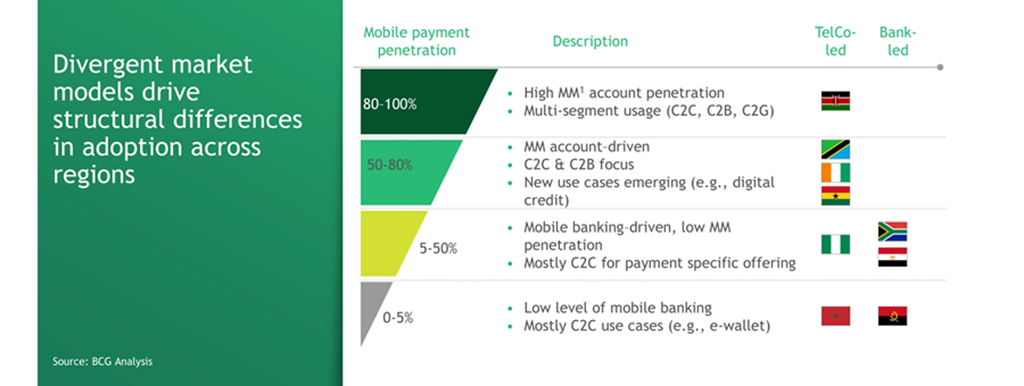
Africa has already demonstrated that FinTech scale is achievable. The next opportunity lies in strengthening the institutional foundations required to sustain that growth. Markets that do so effectively will shape Africa’s financial system over the coming decade.
The post Kigali Emerges Africa’s New Hub for Scalable FinTech Infrastructure appeared first on Tech | Business | Economy.