
 7 hours ago
1
7 hours ago
1
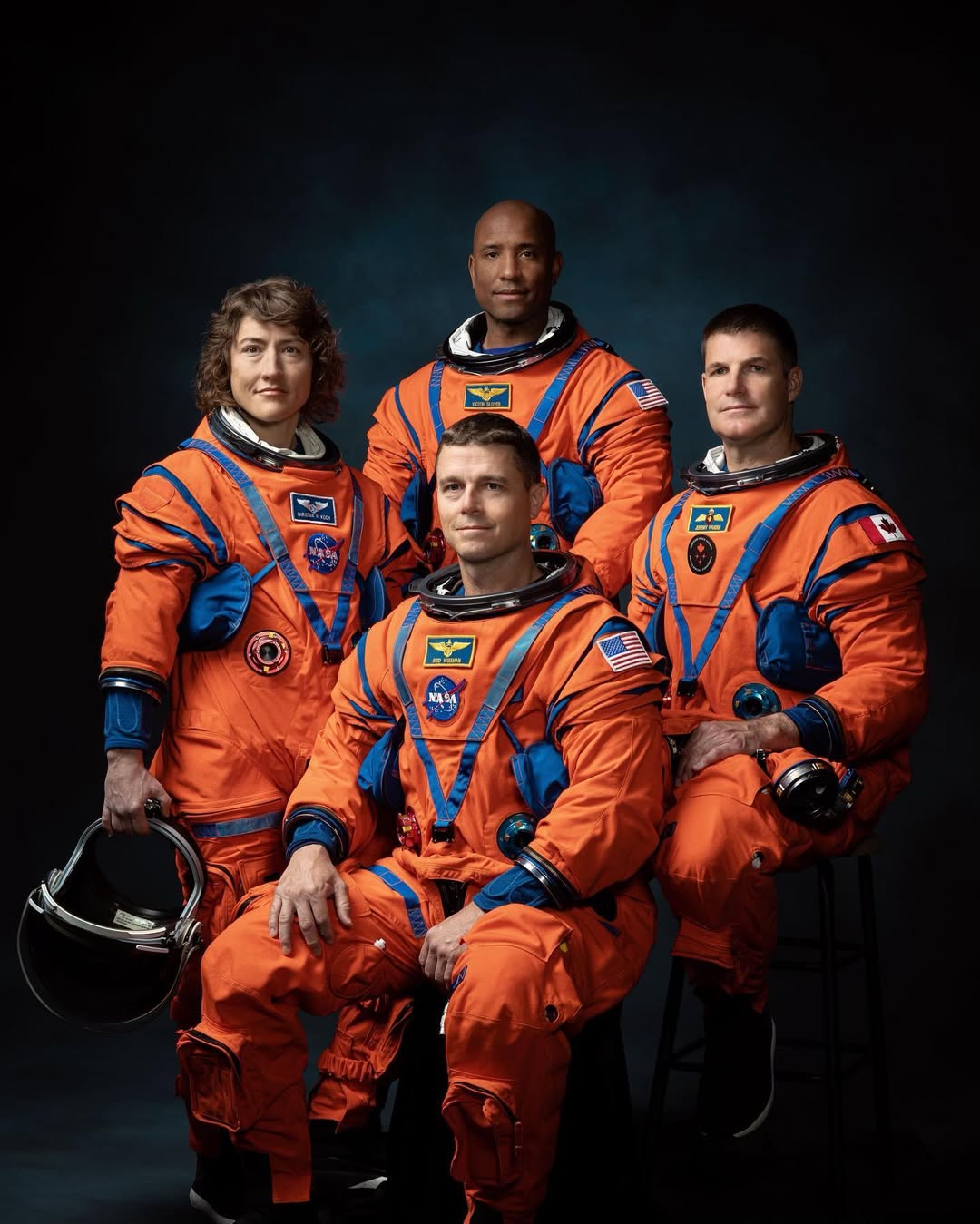
The four-member Artemis II crew: NASA astronauts Christina Koch, Victor Glover, Reid Wiseman, and CSA astronaut Jeremy Hansen. The team is pictured in their Orion Crew Survival System suits ahead of the historic 2026 lunar flyby mission. Photo Credit: NASA Artemis/Instagram
If you have ever looked up at the sky and wondered what we look like from the other side of it, the Artemis II crew just sent back the answer. NASA has released the first high-resolution images of Earth taken by the four astronauts aboard the Orion spacecraft, and they are already being described as some of the most remarkable photographs ever captured from space.
The mission launched from Kennedy Space Center on 1 April 2026, carrying NASA astronauts Reid Wiseman, Victor Glover, and Christina Koch, alongside Canadian Space Agency astronaut Jeremy Hansen, making it the first crewed mission beyond low Earth orbit since Apollo 17 in December 1972. The photographs were taken by mission commander Reid Wiseman on 2 April, from the Orion spacecraft’s window after completing the translunar injection burn, the engine firing that placed the crew on their path toward the Moon.
The most striking of the images, now titled “Hello, World,” shows Earth almost eclipsing the Sun, with auroras visible at the top right and bottom left of the planet, and zodiacal light glowing in a band at the bottom right. A second image, taken minutes apart with a shorter shutter speed, emphasises Earth’s nighttime glow, described by NASA as “a pale blue dot seen through the crew’s eyes.”
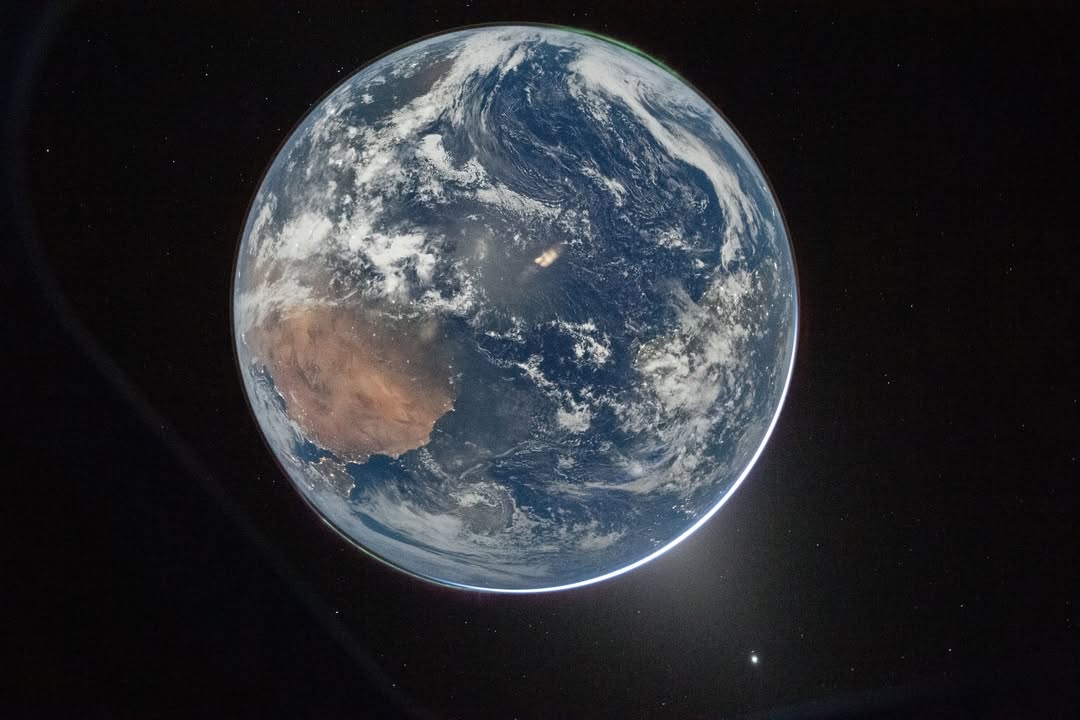
Captured from the Orion spacecraft on April 2, 2026, this full disk view of Earth highlights the African landmass and the green glow of an aurora at the 1 o’clock position. The image was taken as the crew traveled toward the Moon during the Artemis II mission. Photo Credit: NASA/Instagram
Speaking at a briefing, NASA official Lakiesha Hawkins called the photographs “amazing,” adding: “It’s great to think that with the exception of our four friends, all of us are represented in this image.”
The astronauts themselves have been vocal about the experience. Canadian astronaut Jeremy Hansen told NASA’s mission control that the Artemis II crew was “glued to the window” and “taking pictures” of the planet after breaking out of Earth’s orbit. Speaking to reporters during a live conversation on 2 April, Commander Wiseman described one particular moment: “There was a moment, about an hour ago, where mission control Houston reoriented our spacecraft as the sun was setting behind the Earth… but you could see the entire globe from pole to pole, you could see Africa, Europe, and if you looked really close, you could see the Northern Lights. It was the most spectacular moment, and it paused all four of us.”
Mission specialist Christina Koch, speaking to reporters during a downlink event on Day 2 of the flight, shared a similar sentiment. “Having just experienced incredible views of planet Earth, and seeing the entire planet out the window in one pane, knowing that we’re about to have some similar views of the moon in that same way is definitely getting me more excited for it,” she said. “I knew that that is what we would see. But there’s nothing that prepares you for the breathtaking aspect of seeing your home planet both lit up bright as day and also the moon glow on it at night, with the beautiful beam of the sunset.”
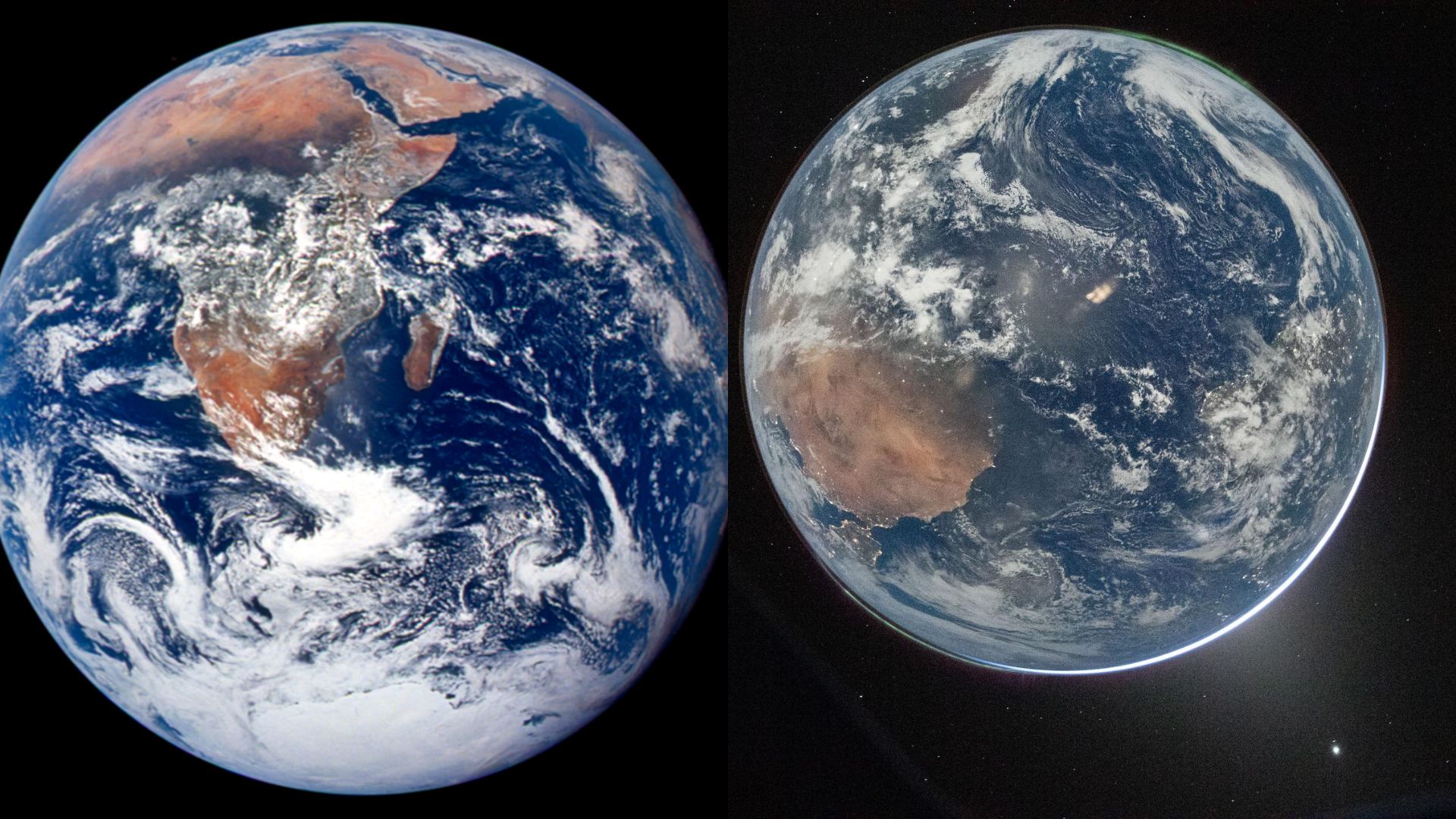
A 54-year visual evolution of planet Earth. The left view was captured by the Apollo 17 crew in December 1972, while the right was taken by Artemis II Commander Reid Wiseman on April 2, 2026, from the Orion spacecraft. Photo Credit: NASA/X
As of Friday morning, the crew were approximately 100,000 miles from Earth and closing in on the Moon, with another 160,000 miles still to go. They are expected to fly around the far side of the Moon on Monday 6 April, before using the Moon’s gravity to swing back toward Earth, with splashdown expected in the Pacific Ocean off the coast of San Diego on 10 April. The mission is a flight test supporting the Artemis programme’s broader goal of returning humans to the lunar surface in 2028 for the first time since Apollo 17.
The post NASA’s Artemis II Crew Captures Stunning Images of Earth from Space appeared first on BellaNaija - Showcasing Africa to the world. Read today!.