
.png) 7 hours ago
1
7 hours ago
1
The payments and digital lending sectors in Nigeria have entered 2026 on solid footing despite operational challenges.
Built on a maturing instant payments backbone, electronic transactions are increasing, regulators are asserting closer oversight, and accessibility to credit is getting stronger.
The Nigerian fintech space is projected to contribute around $6 billion to the nation’s GDP by the end of 2026, which will be largely driven by payments processing and expanding digital credit access.
In February 2026, the Central Bank of Nigeria (CBN) unveiled an 18-month fintech roadmap focused on implementing open banking, strengthening supervision, and enabling secure cross-border interoperability.
The plan is widely seen as a defining moment for the next phase of growth in the sector.
Regulatory scrutiny is also intensifying. The Federal Competition and Consumer Protection Commission (FCCPC) set a January 2026 compliance deadline for digital lenders, granting a final grace period until April for registration. Platforms that fail to meet the requirements risk delisting.
The move is aimed at curbing predatory practices while preserving innovation in a market that disbursed an estimated $865 million in digital loans in 2025.
On the infrastructure side, the Nigeria Inter-Bank Settlement System (NIBSS) Instant Payments platform maintained top maturity ratings across Africa in late 2025 and continues to process billions of naira in real-time transfers each year.
Meanwhile, deployed POS terminals crossed the 8 million mark in early 2025, with first-quarter transaction values exceeding ₦10.5 trillion.
Taken together, these developments reflect how far Nigeria’s fintech ecosystem has come in the past decade, especially in expanding financial services to underserved and unbanked communities.
Below are ten trends expected to shape payments and digital lending in 2026.
1. Phased Rollout of Open Banking
 Open Banking and Super Apps
The CBN’s open banking framework is set to begin limited commercial operations this year. Licensed participants will be able to share customer-consented data securely through standardised APIs.
Early applications are expected to focus on payment initiation and improved credit scoring for small and medium-sized enterprises (SMEs), as well as individuals in the informal sector.
With better access to verified financial data, lenders are likely to refine underwriting models and develop more tailored products.
2. Continued Growth in Real-Time Payments
Instant transfers are at the heart of Nigeria’s electronic payments system. Real-time rails are already dominant for salary payments, merchant settlements, person-to-person transfers and bill payments.
With transaction volumes increasing, operators are expected to prioritise infrastructure resilience, especially during peak periods, to minimise service disruptions.
3. Shift Toward a More Cash-Lite Economy
Cash usage in everyday transactions has been declining steadily over the past few years. Analysts expect the trend to continue, supported by mobile wallets, expanding POS networks and government-backed cashless policies.
Digital channels are now playing a bigger role in e-commerce, informal retail and rural-urban remittances, gradually reshaping payment behaviour.
4. Faster and Cheaper Cross-Border Payments
 Visa cards
Cross-border remittances and trade payments are becoming more efficient, helped by fintech partnerships and improving foreign exchange liquidity. Some platforms are exploring blockchain-based corridors and stablecoin settlements, while traditional remittance channels benefit from better interoperability.
These changes could support diaspora inflows and small-scale trade transactions under the African Continental Free Trade Area framework.
5. Consolidation in Digital Lending
Following the FCCPC’s enforcement actions, the digital lending market is expected to shrink in number but strengthen in structure. Non-compliant operators may exit or restructure to meet standards on pricing transparency, debt collection and data privacy.
Industry watchers expect surviving players to focus more on sustainable underwriting and long-term customer relationships rather than short-term loan cycles.
6. Expansion of Buy Now, Pay Later (BNPL)
Africa’s Buy Now, Pay Later market is projected to reach $6.5 billion in gross merchandise value in 2026, with Nigeria ranking among the leading contributors alongside Kenya, South Africa and Egypt.
Integration with major e-commerce platforms and offline retail chains is likely to deepen adoption. At the same time, regulators are paying closer attention to affordability checks and credit risk management.
7. Greater Use of Alternative Data in Credit Scoring
The push for e-invoicing and digital transaction records is opening up new data sources for lenders. Verified tax filings, payment histories and utility records are increasingly being used to assess creditworthiness.
For informal-sector operators without traditional credit histories, this could mean broader access to formal finance.
8. Evolution of POS and Agent Banking
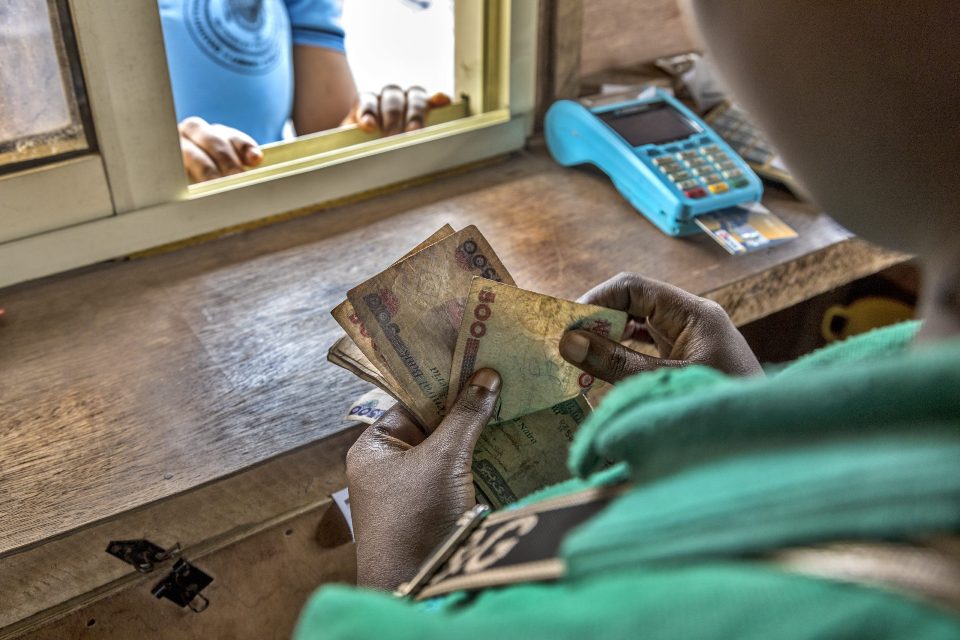 A PoS merchant providing service to a customer
While POS deployment continues in both urban and rural areas, growth is slowing in major cities where the market is nearing saturation.
Attention is shifting toward agent profitability and the introduction of value-added services such as micro-loans, savings products and bill payments through agent networks.
9. Extension of the Global Standing Instruction (GSI)
The CBN has signalled plans to extend the Global Standing Instruction framework to fintech lenders and microfinance banks.
If implemented broadly, the move could strengthen loan recovery mechanisms, reduce default rates and promote more responsible lending practices across the digital credit space.
10. Rise of Embedded Finance and Super-Apps
 Stanbic IBTC super app
Financial services are increasingly being built into non-financial platforms, including ride-hailing apps, online marketplaces and utility payment systems.
Payments, wallets, micro-insurance and small-ticket loans are now integrated into everyday digital platforms. As competition intensifies, companies are racing to offer seamless, all-in-one experiences while keeping up with regulatory demands.
Final Analysis
Nigeria’s digital financial services ecosystem is moving into a more mature phase. Payments infrastructure is largely in place, shifting the focus toward scale, stability and cross-border integration.
At the same time, digital lending is entering a period of tighter regulation and consolidation.
The projected $6 billion contribution from fintech to GDP in 2026 underlines the sector’s growing economic weight.
How effectively these trends translate into deeper financial inclusion and long-term stability will depend on continued coordination between regulators, operators and infrastructure providers in a policy environment that is still evolving.
The post Top Nigerian Payments & Digital Lending Trends to Watch in 2026 appeared first on Tech | Business | Economy.