 12 hours ago
4
12 hours ago
4

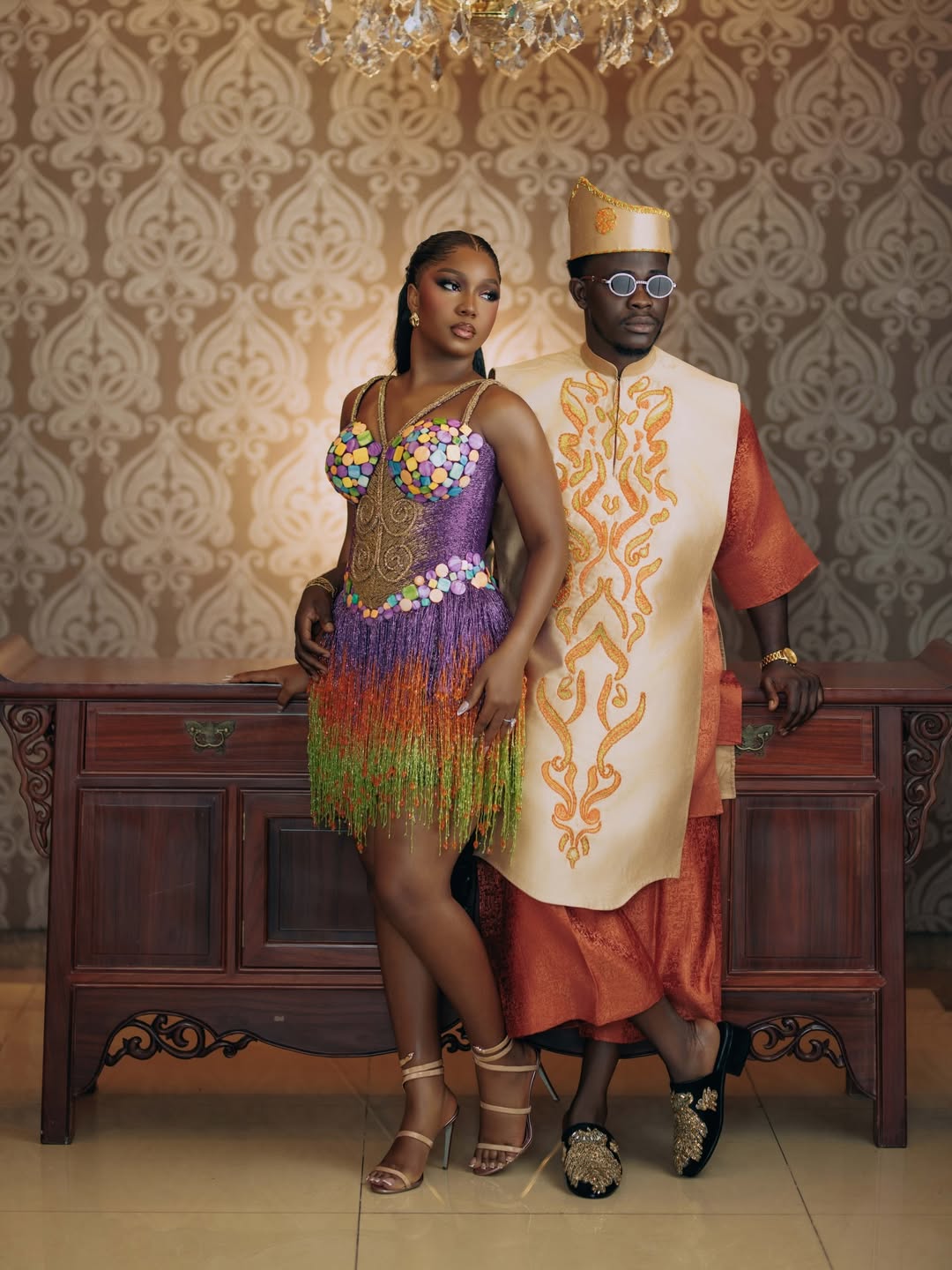
Photo credit: Nora Awolowo
I do not live in Lagos. I must begin with that clarification to avoid the smirk, “Of course he’s saying all this because he doesn’t live in Lagos”, that might follow after reading this article. And yes, you may be right. Perhaps I am highlighting the points in this article because my distance from the city makes certain questions easier to ask. But I have experienced Lagos enough to understand that it is important we review why everything seems to be happening there.
I am, again, going to mention a personal issue to serve as a lens for the broader coverage. I was once rejected for an opportunity specifically because I do not live in Lagos. I do not mind moving to Lagos, but the opportunity was short-term, which I could have found a solution for, but that the rejection decision was made mainly because I do not reside in Lagos tells something.
The structure of Nigeria at the moment has turned Nigerians into people constantly seeking an escape. An average Nigerian who grew up in a village dreams of escaping to a city. From that city to Lagos. And from Lagos – when Nigeria catches them at the toes and stifles basic things – to abroad. So to be Nigerian is to seek an escape. Many young Nigerians grow up with the mentality that, even when and if they are doing fairly well elsewhere, they aim to move to Lagos. It’s been famed as the place where dreams come true, rightfully so. It is why people who have nothing move to Lagos in search of something. This is well portrayed in FOLA‘s music video, Eko.
It’s been like this for years. Should we ask why?
The simple cliche response is: Everything is in Lagos. Every industry exists in Lagos. From music, fashion, film, art, corporate, tech, business, you name it. They all exist in Lagos, and this is why out of the 36 states in the country, Lagos is the most populous city, with over 13 million people fighting for a space in the city. But the more important question is not simply that everything is in Lagos. The question is why everything had to be in Lagos in the first place.
You could argue that it is because it was previously the country’s capital. But many years have passed, and countries with strong economies rarely concentrate all their industries in a single city. In the United States, industries are spread like seeds across the map. The film industry flourishes in Los Angeles. California is the hub of technology. A young American does not necessarily grow up believing their destiny depends on relocating to New York. There are multiple centres of possibility.
The same can be said of the United Kingdom. While London is influential, culture, education, and industry also thrive in places like Manchester, Birmingham and Edinburgh. Talent disperses, and opportunity follows.
In China, the decentralisation is even more deliberate. Many provinces specialise in particular industries. One city might become known for electronics manufacturing, another for textiles, another for machinery. Economic ecosystems form around these specialisations. When a region becomes known for producing something, investment naturally flows there, and the people who grow up in that region can participate in the industry without uprooting their entire lives.
Nigeria, on the other hand, has gradually built a national imagination that funnels ambition into one place. Lagos has now become the gravitational centre. Everything else feels like a waiting room. The consequence of this is that it creates pressure on Lagos. Housing becomes scarce. Transportation becomes exhausting. Yet millions arrive each year, believing that the city holds the key to their future.
Ironically, the rest of the country slowly empties of opportunity. Talented and brilliant young people leave towns and smaller cities not necessarily because they want to, but because they believe they must. If I had a dollar for every time I’ve been advised to move to Lagos, I would probably be rich by now.
A child growing up in a place like Osogbo, Port Harcourt, or Makurdi should be able to imagine a future rooted in where they are. They should be able to look around their environment and see industries, studios, offices and creative hubs that tell them that they can build something here. Why does an artist have to move to Lagos to blow? One can hardly mention a Nigerian celebrity who lives outside Lagos.
Another consequence of this is that Nigeria is often perceived as a two-city country by the international audience. Whenever I introduce myself as Nigerian to a foreigner, they typically respond with, “Oh, you’re from Lagos?” Abuja is mentioned occasionally, but rarely. This perception has influenced how they view the country, so they focus their investments in Lagos.
This is not an argument against Lagos because I understand every country has its most influential or popular city, but in a developed country, it is not always at the detriment of other states. Lagos is one of the most fascinating cities in Africa because of its energy and how it helps actualise ambitions, but Nigeria should not be a country where everyone moves to Lagos. This is, of course, not the fault of anyone but the system that has enabled it. But should we talk about it?
If you do have an opportunity for me in Lagos, share with me, abeg.
The post Why Does Everything Happen in Lagos? appeared first on BellaNaija - Showcasing Africa to the world. Read today!.