
 2 hours ago
3
2 hours ago
3
Lagos State’s primary vehicle for tackling unemployment through entrepreneurship has spent a decade building something unusual in Nigerian public sector intervention: a loan book with a repayment rate that would be the envy of many commercial lenders.
The Lagos State Employment Trust Fund (LSETF) disclosed on Monday that it has disbursed more than ₦15 billion to over 20,000 micro, small, and medium enterprises since its establishment in 2016, contributing to the creation of over 320,000 direct and indirect jobs across the state.
The figures were presented by Feyisayo Alayande, the executive secretary, during a media parley in Ikeja marking the agency’s ten-year impact assessment.
The headline figure that deserves more attention
Beyond the loan disbursement numbers, Alayande revealed that the fund has helped preserve more than 173,000 jobs that could otherwise have been lost, a figure that speaks to a less visible but equally important function of small business financing: keeping existing employment intact during periods of business stress, rather than only counting new jobs created.
Over 82,000 small businesses have participated in capacity-building programmes designed to improve operational sustainability, while more than 30,000 young people have been trained and connected to employment opportunities through various interventions.
The repayment number that matters most
For an agency built on public funds disbursed as loans rather than grants, the most consequential metric in the report is the one most easily overlooked: a 94.53 per cent loan repayment rate.
“Our repayment rate is not just a financial metric. It demonstrates that when people are given genuine opportunities and treated with dignity, they honour their commitments. Lagos entrepreneurs have consistently shown that they are not a risk but an opportunity,” Alayande said.
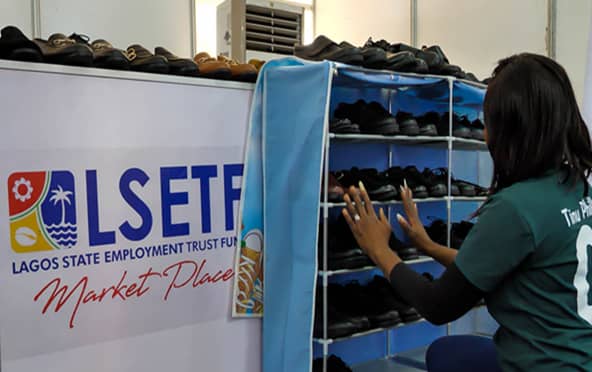 Lagos State Employment Trust Fund
The figure carries weight beyond rhetoric. Repayment performance at this level is the foundation that determines whether a revolving fund model is sustainable, whether the ₦15 billion already disbursed can be recycled into future lending cycles, or whether the fund will require continuous fresh injections of capital to maintain its activity level.
A near-95 per cent repayment rate suggests the former is plausible, which matters significantly for the fund’s next decade of operations.
The technology angle
For Techeconomy’s readers, the most relevant strand of LSETF’s work is its Lagos Innovates initiative, which has supported over 1,200 technology startups and developed more than 3,300 tech talents over the period under review.
The scale here is worth contextualising. Lagos remains Nigeria’s primary technology hub, hosting the largest concentration of the country’s funded startups and technology talent.
A state-backed initiative supporting 1,200 startups, even allowing for variation in stage, scale, and survival rates, represents a meaningful, if underreported, contribution to the ecosystem’s base layer, particularly for early-stage ventures that fall below the radar of venture capital but still require structured support to formalise and grow.
Alayande cited specific examples of this support translating into outcomes: a female entrepreneur who participated in the Lagos Innovates programme later showcased her innovation at GITEX, one of the world’s leading technology exhibitions, a data point that illustrates the pathway from local capacity-building to international visibility, however incremental.
Where the access gap remains
Alayande was candid about what the numbers do not yet solve.
“The difference between someone who succeeds and someone who does not is often access. Access to capital, access to knowledge, access to markets and access to networks. That is the gap LSETF was created to bridge,” she said.
That framing is worth holding against Lagos’s scale. The state’s working-age population runs into the tens of millions, and its informal economy, the segment LSETF’s lending model is primarily designed to formalise and support, is estimated to comprise a substantial majority of the state’s economic activity.
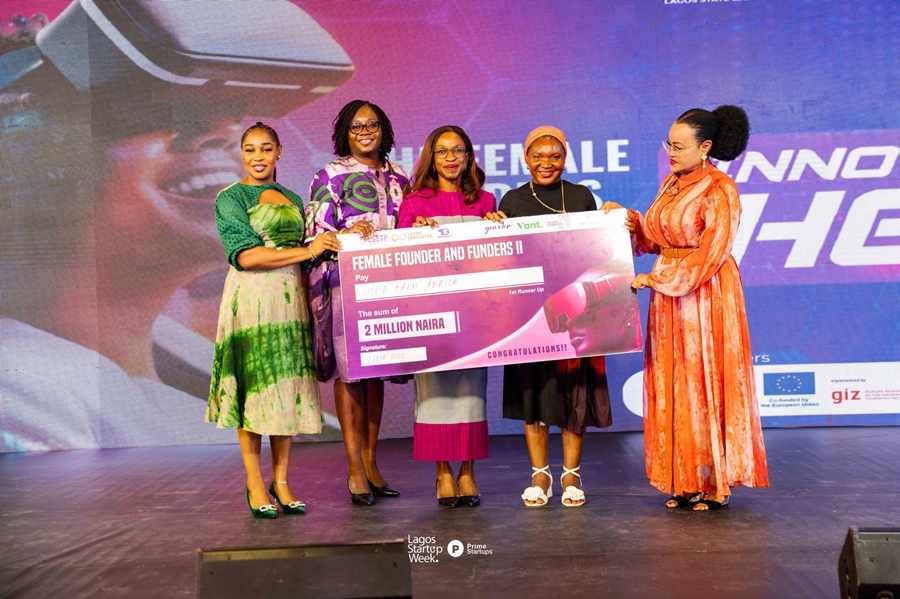 LSETF Female Founders & Funders Program III
Twenty thousand loans over ten years, against that backdrop, represents meaningful but proportionally modest penetration. The fund’s own framing, access as the central constraint, implicitly acknowledges that the demand side of this equation remains far larger than current supply.
Partnerships as a scaling mechanism
LSETF’s collaborations with organisations including GIZ, UNDP, King’s Trust International, Lafarge, and various government ministries point to one pathway for addressing that scale gap: leveraging development partner capital and expertise to extend reach beyond what the fund’s own balance sheet permits.
One example cited, a woman living with a disability who completed a Lafarge-supported skills acquisition programme in mobile phone repairs and subsequently built a sustainable livelihood, illustrates the kind of targeted, partnership-driven intervention that can reach populations underserved by mainstream lending and training infrastructure.
What comes next?
Alayande outlined plans to deepen interventions through expanded capital access for growing businesses, broader youth training programmes, and strengthened support for technology-driven enterprises.
The agency will convene the Lagos Employment Summit 4.0 in the fourth quarter of 2026, bringing together government agencies, private sector players, development partners, and civil society groups to chart the next phase of job creation and enterprise development strategy for the state.
“We are proud of what has been achieved over the last 10 years, but we are focused on doing even more. The next decade must deliver greater access to finance, more jobs, more training opportunities and stronger support for businesses that are ready to grow,” Alayande said.
The ten-year report establishes LSETF as a functioning, fiscally disciplined intervention model, a track record that gives the agency credibility to make the case for expanded scale.
Whether Lagos’s policymakers respond to that case with the capital expansion the access gap requires will determine whether the next decade’s numbers represent genuine acceleration or simply a continuation of the current trajectory at the current pace.
The post LSETF’s Decade in Numbers: ₦15bn Disbursed, 320,000 Jobs Created appeared first on Tech | Business | Economy.










 English (US) ·