
.png) 1 hour ago
1
1 hour ago
1
Mosaic SoC has raised $3.8 million in a pre-seed funding round to bring real-time spatial awareness to low-power consumer devices.
Founderful led the round for the Zurich-based chip company, with participation from Kick Foundation.
Devices today can capture images and data, but many still find it difficult to interpret what they see without draining battery life.
Mosaic SoC is trying to fix that with a dedicated perception chip designed to process visual and sensor data in real time, while using far less power than traditional processors.
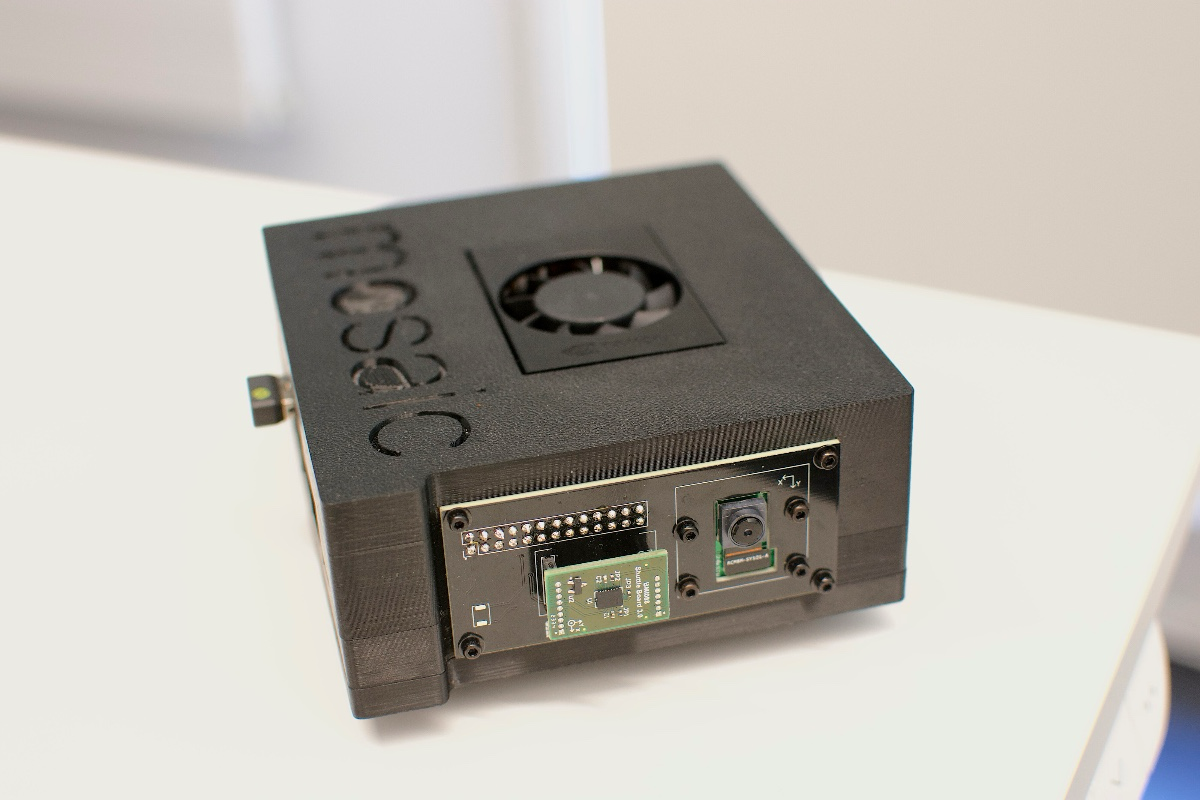 Source: Mosaic SoC
The company is building integrated circuits for wearables and mobile devices, including smart glasses and smartphones. These chips allow devices to map their surroundings, track objects, and respond to events without relying on heavy processing systems.
“Spatial intelligence shouldn’t require an application-class processor and a GPU,” said Alfio Di Mauro, CEO and co-founder of Mosaic SoC. “We built Mosaic SoC to deliver real-time perception at a fraction of the energy, so battery-powered devices can understand their environment without compromising form factor.”
Right now, many advanced features depend on power-hungry processors. That creates limits on battery life, device size, and heat. Mosaic SoC’s approach is different. It places a smaller, dedicated chip alongside existing hardware to handle perception tasks more efficiently.
In practical terms, the chip can help a device remember where objects were last seen or generate a simple map of a room. On smartphones, it can run continuous tracking through the camera but only trigger recording when needed. That reduces unnecessary power use.
The company was founded by Moritz Scherer and Di Mauro, both trained in chip design at ETH Zurich. They saw a gap between the growing demand for on-device intelligence and what current hardware can support.
They sell chips, but they also provide a software layer that manufacturers can build on, which removes the need to develop these features from scratch.
In its first year, the company said it has already generated revenue through engineering contracts with device makers. As production scales, it expects to rely more on chip sales.
Mosaic SoC’s design uses a multi-core architecture with eight or more cores, aimed at improving performance while keeping energy use low. Alongside the hardware, the company is also developing tools that allow developers to deploy and optimise applications on its system.
Antonia Albert, an investor at Founderful, said: “The next billion smart devices will see and understand the world around them. Mosaic SoC’s product is the chip that makes that possible at scale.
“Moritz and Alfio have the architecture, the platform vision, and the team to make it happen. We are proud to back them with Founderful on their journey to define the spatial computing era.”
The focus now is on getting these chips into more devices. The company’s long-term aim is to make spatial awareness a standard feature in everyday hardware without increasing cost or complexity.
The post Mosaic SoC Raises $3.8 Million to Build Low-Power Spatial Awareness Chips appeared first on Tech | Business | Economy.