
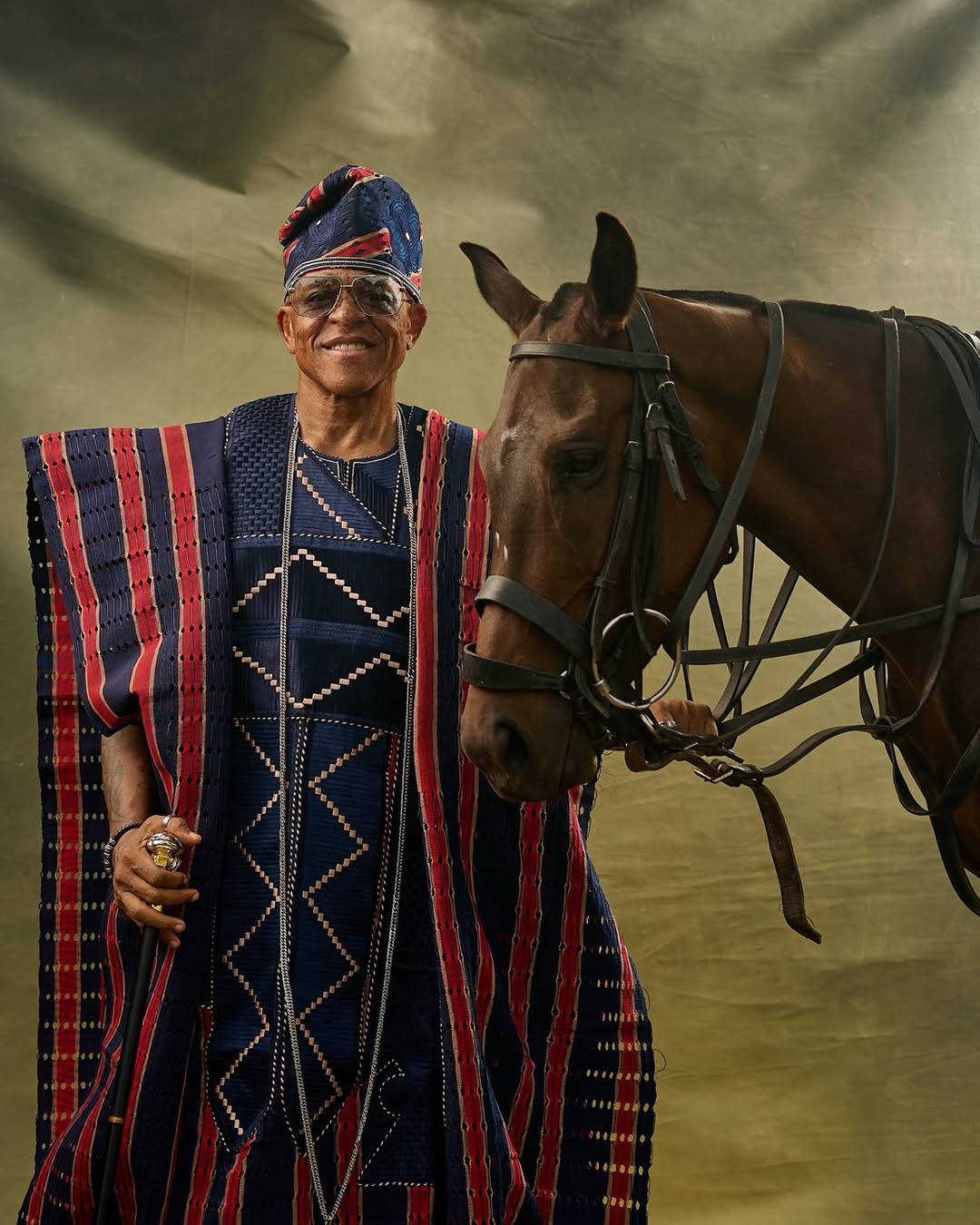
Cultural style icon Farooq Oreagba showcasing custom heritage Yorùbá tailoring ahead of the 2026 Ojude Oba Festival in Ijebu-Ode. Photo Credit: Farooq Oreagba/Instagram
Friday, 29 May 2026 is almost here, and if you know what Ojude Oba is, you already know why this week feels different. If you do not, consider this your introduction to one of the most spectacular cultural festivals in Nigeria, and your sign to make plans immediately.
Ojude Oba, which translates to “the King’s Forecourt” in Yorùbá, is an annual festival held in Ijebu-Ode, Ogun State, on the third day after Eid el-Kabir. What began in the 19th century as a modest gathering of Muslim faithful paying homage to the Awujale of Ijebuland has grown into one of Nigeria’s largest cultural celebrations, drawing over 100,000 attendees from across the country and the world. The festival is a full day of age-grade processions, where over 90 regberegbe groups parade in coordinated traditional attire — lace, Asọ-Ọkè, brocade, ankara — dripping in beads, headgear, and gold.
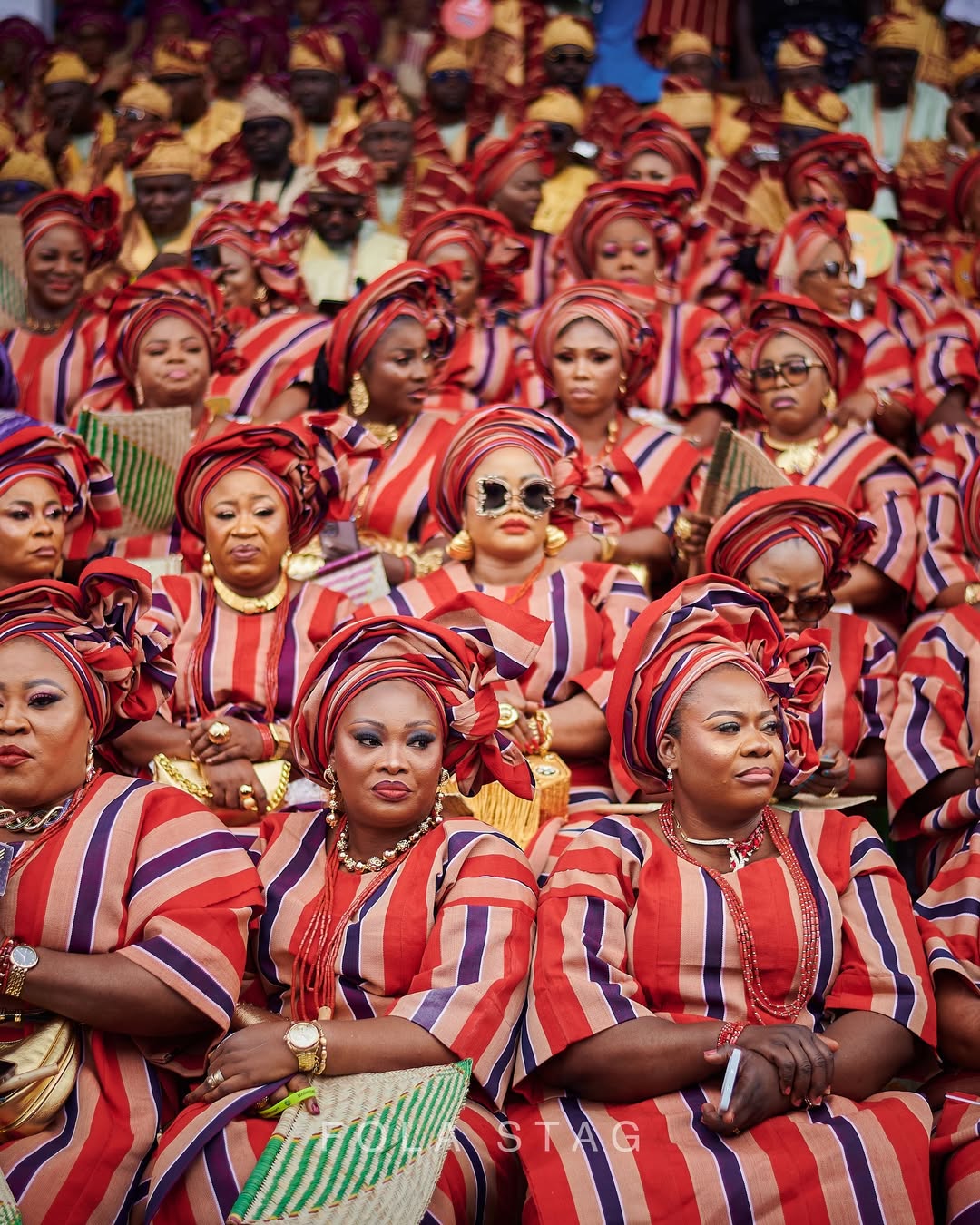
A prominent women’s Regberegbe cohort seated at the Awujale Pavilion in matching multi-toned traditional attire during the festival, photographed by Fasanmi Afolabi.
Ornately dressed horse riders representing the distinguished Balogun families add another layer of spectacle, and the drumming, dancing, and cultural displays that fill the Awujale Pavilion and surrounding Itoro Centre create an atmosphere that photographs cannot fully capture. Beyond the pageantry, Ojude Oba is also a unifying gathering — for reflection, community pride, and collective celebration of Ijebu heritage.
As for what to expect this year, the format remains the same: a full day of processions, horsemanship, and cultural performances at the Itoro Centre in Ijebu-Ode. The bar for fashion, as always, will be very high. Speaking of which — Farooq Oreagba, the man widely known as the King of Steeze and one of the festival’s most prominent and photographed faces, has already shared photos of himself in a magnificent Asọ-Ọkè Agbada set in navy blue, crimson, and cream, photographed beside a horse. The pre-festival photos alone had us counting down the days.
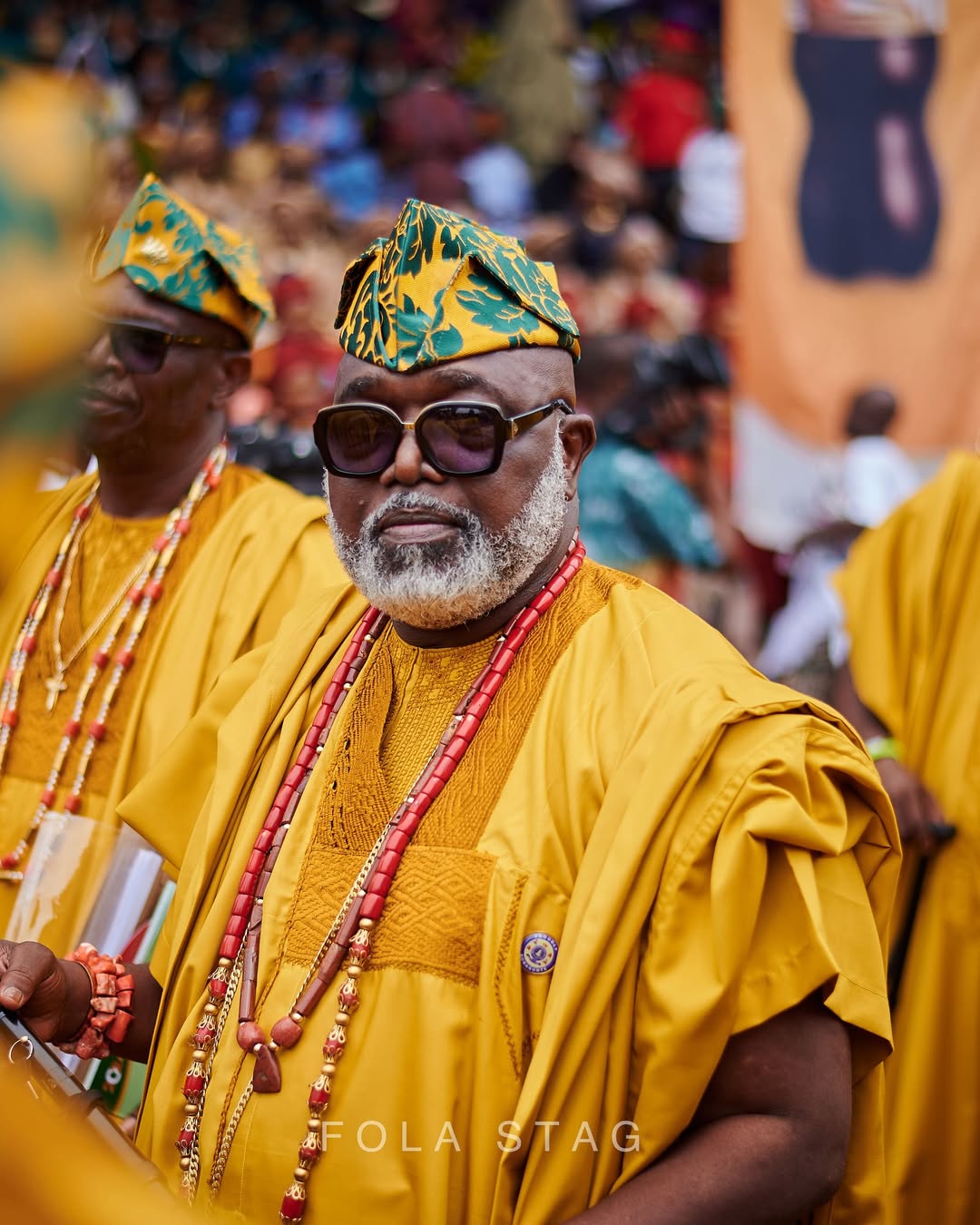
Traditional men’s styling at Ojude Oba featuring a structured mustard yellow Agbada paired with heritage coral beads, captured by photographer Fasanmi Afolabi.
First timer? Here is what you need to know:
Getting there is straightforward. Ijebu-Ode is approximately 90 kilometres from Lagos, roughly a two-hour drive depending on traffic. Leave early. The roads into Ijebu-Ode get very busy from mid-morning, and the processions begin in the morning with the main activities running through the afternoon. Dress the part, this is not the occasion for casual wear. Traditional attire is not just encouraged, it is the entire point. Asọ-Ọkè, lace, agbada, iro and buba — wear your finest and wear it with intention.
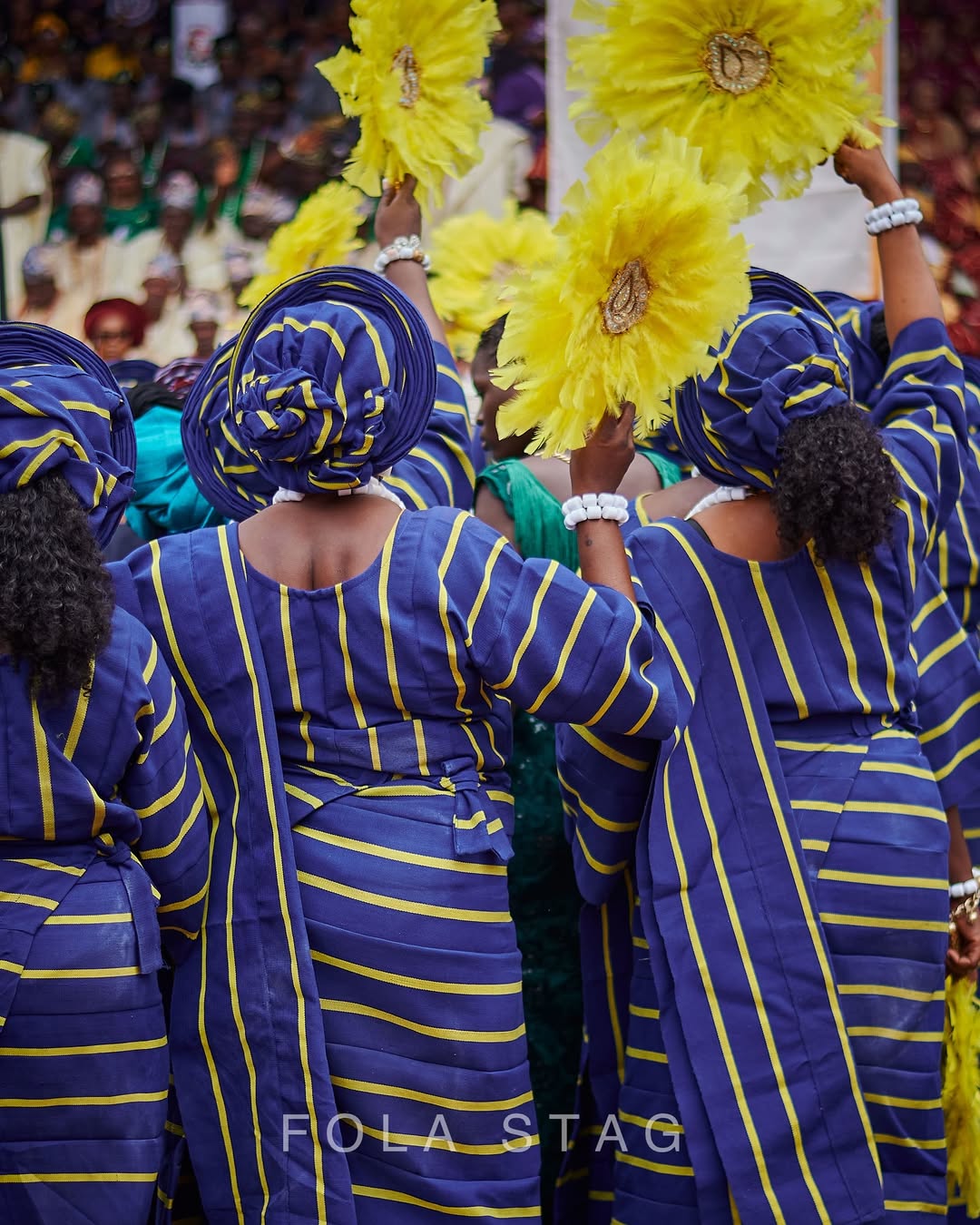
A vibrant procession of a women’s age-grade group showcasing coordinated blue and yellow traditional textiles at Ojude Oba, photographed by Fasanmi Afolabi.
Comfortable footwear is worth thinking about since you will be on your feet for a good portion of the day. Bring cash for food, souvenirs, and the pop-up markets that line the streets. And most importantly, go with an open mind — Ojude Oba is loud, colourful, and joyfully overwhelming in the best possible way. First-timers rarely leave without wanting to come back the following year.
The post Ojude Oba 2026 Is Coming | From Regberegbe Groups to Horse Riders, Here’s What to Expect appeared first on BellaNaija - Showcasing Africa to the world. Read today!.













 English (US) ·