
 1 hour ago
1
1 hour ago
1
Wazzup.
We’re mid-week, and it’s going great! A raise, Internet service providers pausing operations, and so much more. Just as eventful as an episode of Dragon Ball Z!
—Zia
Get smarter about Francophone Africa with our newsletter, Francophone Weekly—the startups, tech policies, and institutions building the pipelines for ecosystem growth.

Fintech
Flutterwave raises undisclosed investment from Circle Ventures
 Image Source: Tenor
In the past year, Flutterwave, Africa’s largest fintech, has been bullish about stablecoins—for use in payments, treasury management, and liquidity sourcing.
Explain like I’m new here: In October 2025, it integrated Polygon as a settlement layer. In January 2026, it launched stablecoin wallet providers with Turnkey and Nuvion. In June, it partnered with Ripple to integrate the RLUSD stablecoin into its products. On Monday, the company added one more infinity stone to its gauntlet: US-based public company Circle, and issuer of the USDC stablecoin, became a strategic investor and partner.
Flutterwave will integrate the USDC stablecoin into its settlement rails.
Who wins here: Circle gets a powerful new distribution partner. USDC, already one of the world’s largest stablecoins but still trailing Tether’s USDT across much of Africa, now gets front-row access to one of the continent’s most important fintechs.
Flutterwave, meanwhile, gets something just as valuable: a stablecoin strategy without locking itself into a single blockchain or payment rail. By building on Circle’s infrastructure, it can move money across different networks while deciding where stablecoins make the most sense for merchants and cross-border payments.
Why this matters: More African fintechs are embracing stablecoins. Soon, we could all be using them, knowingly or not. The debate over whether dollar-backed stablecoins becoming part of everyday payments threatens monetary sovereignty remains contentious.
But if stablecoin activity can migrate from informal peer-to-peer (P2P) markets to regulated fintech platforms, it’s a win for everyone with a vested interest, especially the Central Bank of Nigeria (CBN), which has proposed a licencing framework for stablecoin issuers, and other African regulators already moving to bring stablecoins into the regulatory framework.


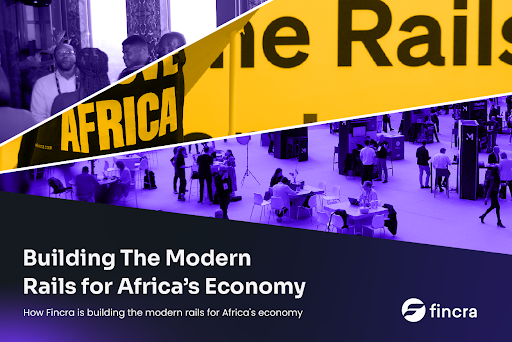
Modern Rails for Africa’s Economy: How Fincra is helping businesses collect, pay out, convert, and settle across African markets. Read more here.
Banking
Kenya just opened its ICT sandbox to 6G, AI, and cybersecurity startups
 Image Source: Tenor
We throw around the word “innovative” every so often. So, if you’re an innovator yourself, you’ll like this one.
If your startup is working on something the Communications Authority of Kenya (CAK), the country’s telecoms regulator, doesn’t quite know how to regulate yet—such as AI applied to telecoms, 6G applications, Internet of Things (IoT), digital broadcasting, or spectrum management—there are open doors for you to “innovate” now.
The CAK has invited startups, technology firms, and researchers to apply for its regulatory sandbox for the 2026/27 financial year.
What’s a regulatory sandbox? It’s a supervised testing environment where companies can run products and services that don’t fit within existing rules, without being penalised for operating outside a framework that wasn’t built for them yet.
Think of it as the regulator saying: we don’t know exactly how to classify what you’re building, but we’d rather watch it work than ban it and miss out. Successful applicants test their solutions under CAK supervision before rolling out commercially. This helps to ensure that all sides are aligned on what constitutes infractions or negatively affects consumers so they can build guardrails early.
Explain like I’m new here: Kenya has been running regulatory sandboxes across financial services and capital markets for several years. Extending the model to ICT—specifically listing 6G, AI in communications, and cybersecurity as priority areas—reflects how fast the frontier is moving.
Between the lines: The sandbox also signals that the regulator expects AI to soon have visible applications in critical sectors it oversees, such as telecoms, spectrum management, and cybersecurity, and it is bracing for impact.
Zoom out: The sandbox also specifically invites technologies aimed at improving digital accessibility for underserved communities, linking it directly to Kenya’s Universal Service Fund mandate. That’s worth noting: this isn’t only a commercial innovation track. It’s also a channel for companies building connectivity for the people that commercial deployment hasn’t reached yet. Applications are open now.
Naira Life 2026 is here!
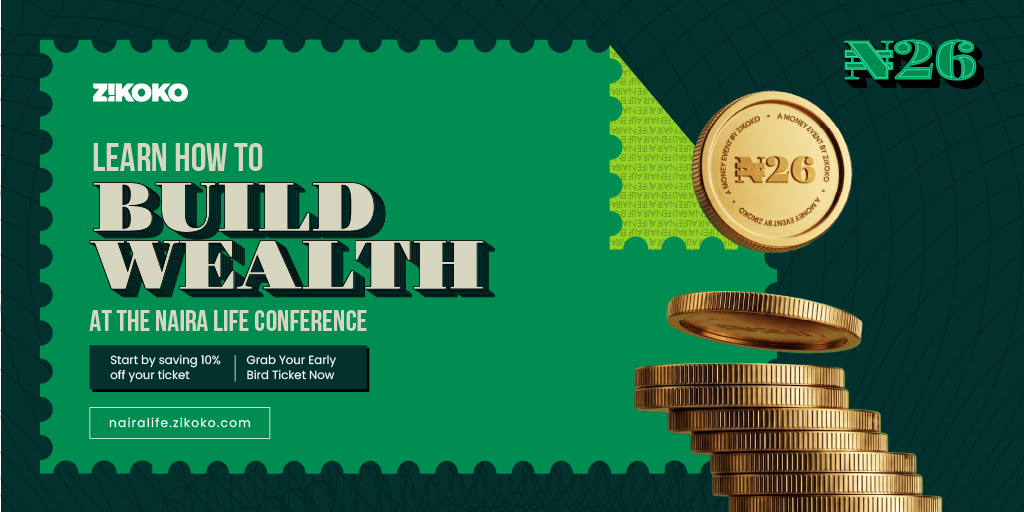
The theme for this year’s Naira Life Conference by Zikoko is “All About Wealth.”
Join 2,000+ in Lagos on August 22 for a day of practical money conversations and workshops designed to move you from simply earning an income to building lasting wealth. Get 15% off early bird tickets.
Regulation
Nigeria wants one rulebook for the Internet
 Image Source: Zikoko Memes
Have you ever had three people giving you different (but oddly similar) instructions at the same time? That’s what regulating Nigeria’s Internet sector has started to look like, and you’ll probably understand why Internet platforms heaved a sigh of relief.
What’s happening? The Federal Ministry of Communications, Innovation and Digital Economy, the body responsible for Nigeria’s digital economy policies, has told Nigeria’s digital regulators to hit pause on the implementation or enforcement of newer rules that overlap with one another while it develops a harmonised framework for internet platforms.
Explain like I’m new here: Imagine you’re running a social media platform in Nigeria. One regulator wants to know how you moderate content, another wants to know how you collect people’s data, and another has rules about online safety. Those rules make sense, but together, they may seem like they’re asking the same thing. The government’s goal is to reduce that overlap so companies aren’t trying to satisfy multiple regulators with overlapping requirements.
What rules are they talking about? The ministry didn’t define what counts as recent regulations, but over the past years, Nigeria’s rulebook for the digital economy has grown. There was the Nigeria Data Protection Act in 2023, which established new rules around collecting and processing personal data. In 2024, amendments to the Cybercrimes Act updated provisions around cyber offences and online investigations. Then, in December 2025, the Nigerian Communications Commission (NCC) released a draft Internet Code of Practice.
What should we expect now? It’s not a regulatory holiday. Regulators can continue enforcing rules that clearly fall within their legal mandates. What’s changing is that overlapping or recently introduced requirements will wait while a new Joint Technical Coordination Committee figures out who should regulate what.
Showcase Your Brand at Moonshot by TechCabal

Founders. Investors. Policymakers. Enterprise leaders. Moonshot 2026 brings together the people shaping Africa’s technology ecosystem across AI, commerce, climate, enterprise, and culture. Spotlight your brand today.
Internet
Starlink is so popular in Kenya that it’s telling customers to join a queue
 Image Source: Tenor
Using satellite Internet can feel like having a VIP pass because while other broadband users are lamenting about network outages due to fibre cuts or cable theft, all you need to do is point the dish at the sky and enjoy the Internet.
Well… about that: Starlink, the Elon Musk-owned satellite Internet service, has stopped accepting new customers in seven Kenyan counties, including Nairobi, Kwale, Murang’a, and Mombasa, because it has run out of available network capacity in those areas. New customers are now asked to pay a deposit and join a waiting list when they try to complete an order.
Explain like I’m new here: When Starlink entered Kenya in 2023, its hardware cost KES 89,000 ($689). Today, the dish costs less than half of that, and customers can even rent one for KES 1,950 ($15) monthly. One could say they were aggressively looking for users, and it worked because Starlink grew from just over 8,000 subscribers to almost 25,000 in nine months.
But with great power comes great responsibility. And Starlink can’t seem to handle all that traffic right now. So, it shut its door to new orders. It’s ironic for the average upwardly-mobile tech bro in Nairobi using Starlink. Escaping the clutches of bad fibre Internet doesn’t mean Starlink cannot happen to you.
Is this déjà vu? Starlink first stopped accepting new customers in Nairobi in November 2024 after the city exceeded available satellite capacity. The freeze lasted for about six months, leaving some customers who had already bought Starlink kits waiting for activation. In Nigeria, metro cities such as Lagos, Abuja, and Port Harcourt also faced similar network limitations when access to Starlink’s Business (Priority) plan was sold out for months until February 2026.
There’s an irony here: Starlink arrived as an alternative to traditional Internet providers, promising to bypass many of the headaches associated with fibre and mobile broadband. But even satellites have limits. The waiting list suggests that satellite Internet is becoming more than a dedicated product for remote farms or wealthy early adopters.
CRYPTO TRACKER
The World Wide Web3
Source:
 Bitcoin Bitcoin |
$62,710 |
– 0.80% |
+ 0.21% |
| Ether |
$1,752 |
– 0.87% |
+ 6.29% |
| LAB |
$3.29 |
– 78.63% |
– 73.45% |
| Solana |
$78.42 |
+ 3.08% |
+ 20.43% |
* Data as of 06.40 AM WAT, July 8, 2026.
JOB OPENINGS
- Kredete —Blockchain Engineer — Lagos, Nigeria
- BBC — Video Journalist, BBC News Igbo — Lagos, Nigeria
- Bank of Taiwan, South Africa —Chief Risk Officer — Gauteng, South Africa
- M-KOPA — Group Tax Manager, Finance Business Partnering Manager — Nairobi, Kenya
Looking for more opportunities? There are additional openings on TechCabal’s job board. We’ve also cleared out outdated listings to keep opportunities fresh for job seekers. If you’re hiring and would like to feature an open role, please submit it via this form.

- TechCabal’s Road to Moonshot brings Africa’s startup debate to Nairobi
- Wahala App thinks public safety deserves its own app
- China’s AI boom is creating a different kind of entrepreneur
- Francophone Weekly: The new $50 million fund backing Senegalese startups
- East African animators break onto global stage









 English (US) ·