
 7 hours ago
3
7 hours ago
3
On TikTok, sports conversations now start before kick-off, continue during the match, and carry on even after it ends.
Over 60 million sports content creators globally already feed a constant stream of commentary, reactions and culture-driven storytelling on the platform, running alongside live sport rather than waiting for it to end.
At the #SportsOnTikTok Mixer recently hosted by TikTok in Lagos, Nigeria, the platform showed what this actually looks like realistically, with a one-liner that changes everything about how sport is consumed online: “We don’t just have followers on TikTok, we have fans.”
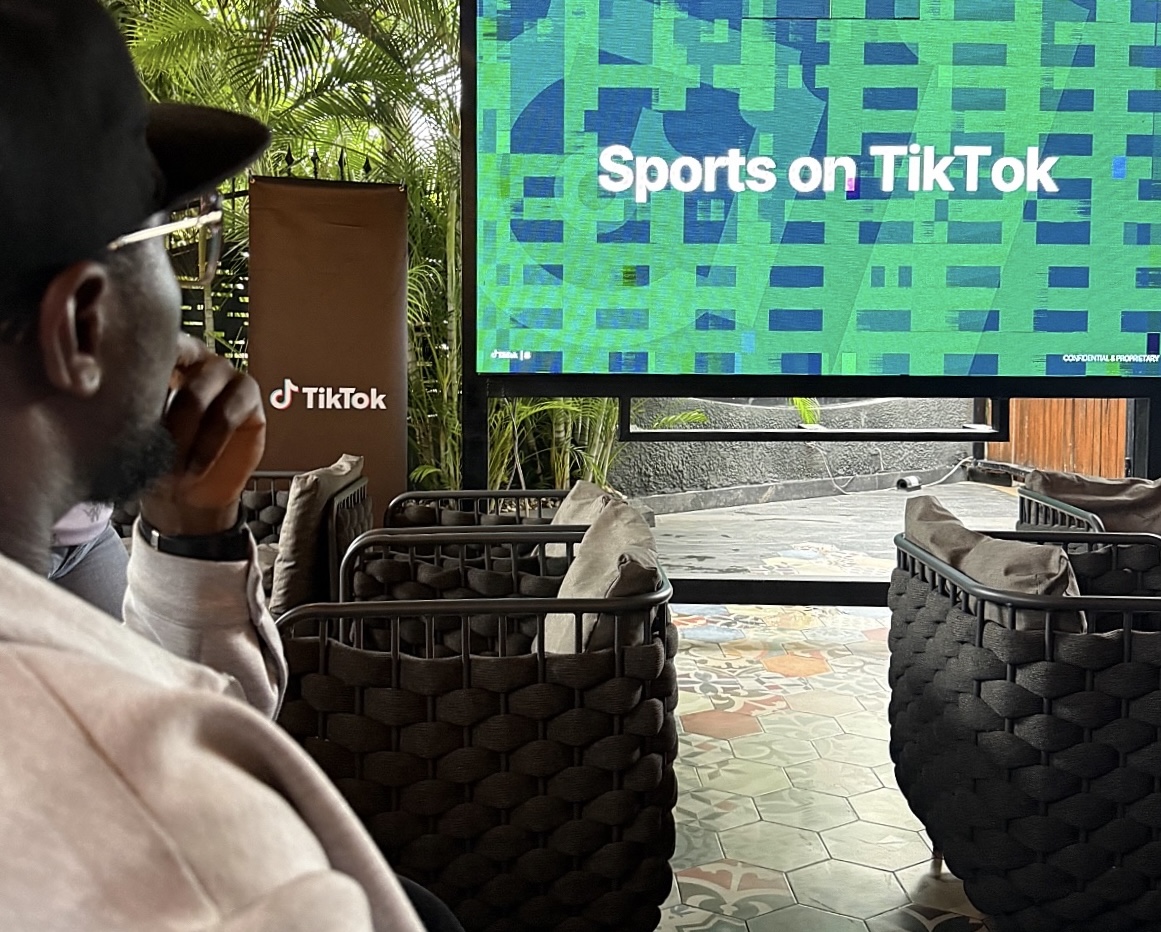
This explains why sports on the platform no longer behave like traditional media, but more like an always-on public square where football, fashion, music, food and even injury analysis are all found in the same feed without hierarchy.
Keagile Makgoba, head of Communications for sub-Saharan Africa at TikTok, said sports content in Nigeria is still driven largely by football, while also expanding into other areas that were initially not part of traditional sports broadcasting.
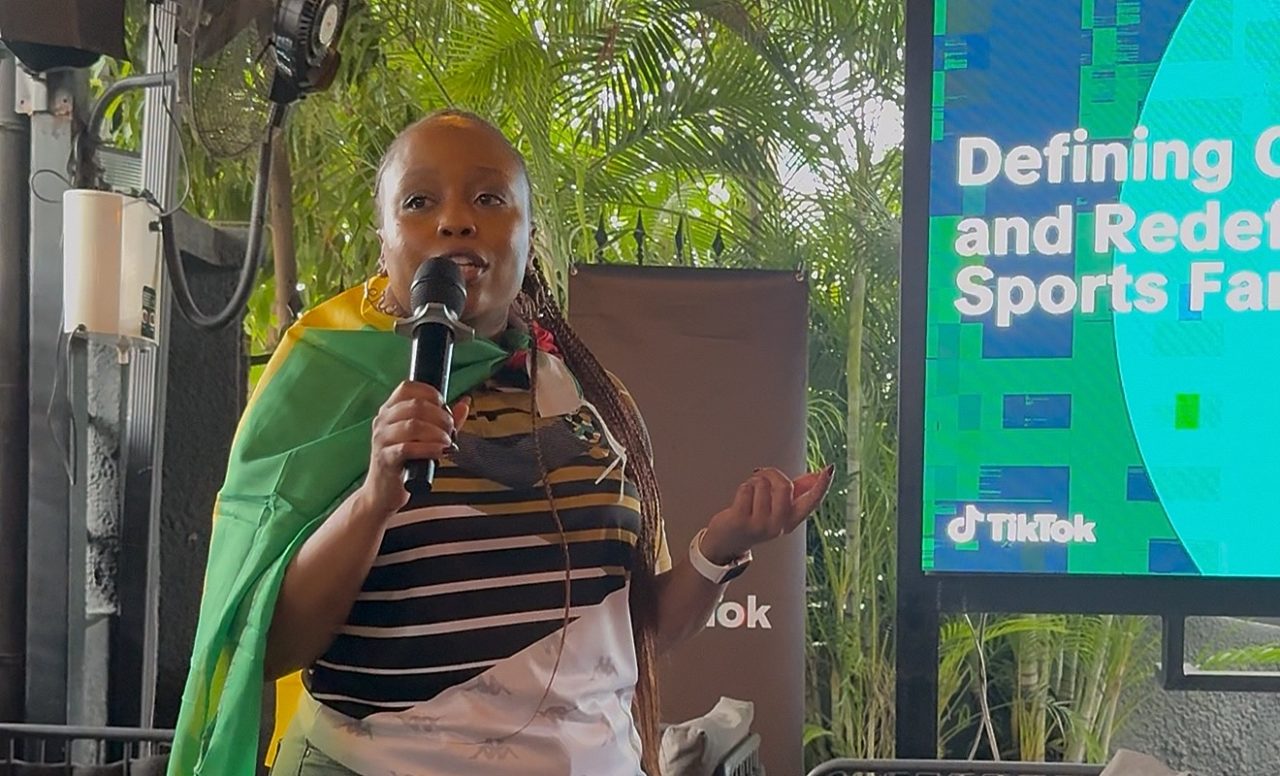 Keagile Makgoba, head of Communications for sub-Saharan Africa at TikTok
What is emerging, she said, is not just highlight culture but lifestyle sport, where the focus is not solely on what happens during the game but also off the pitch.
These include dressing room moments, coaching conversations, match-day meals, stadium fashion, and even the music fans are listening to while the game is on.
That expansion has encouraged participation in ways traditional sports media never fully captured, especially among women. Data from TikTok revealed that 64% of women now choose the platform as their primary destination for sports content.
This means increased viewership and a change in who feels included in sports conversations in the first place.
Makgoba linked that change to something way more than content variety, explaining that sport is no longer defined strictly by the 90 minutes on the pitch but by everything that surrounds it. These include music trends, player personalities, and the social reactions that build around every big moment.
“I enjoy seeing what’s happening in the change rooms, what the coaches are saying to the players,” she said, describing how audience interest has expanded into behind-the-scenes moments that used to be inaccessible or filtered through traditional media.
This change in consumption is also measurable in behaviour, with 54% of users following pre-event sports news on TikTok, and another 54% scrolling and engaging during live matches, effectively turning a single game into two parallel experiences.
These are the broadcast itself and the social reaction around it, creating what TikTok describes as a second-screen culture.
In simple terms, it means viewers don’t just watch sports anymore, they are also watching how other people are reacting to sports in real time. That constant loop of content and response has created a feedback system where engagement usually influences what gets attention next.
Makgoba explained it through her own experience, saying that exposure to tennis content on TikTok moved her from a passive viewer to someone who actively participated. Eventually, she began watching documentaries, following tournaments, and even playing the sport socially.
This, she said, shows a general pattern across the platform.
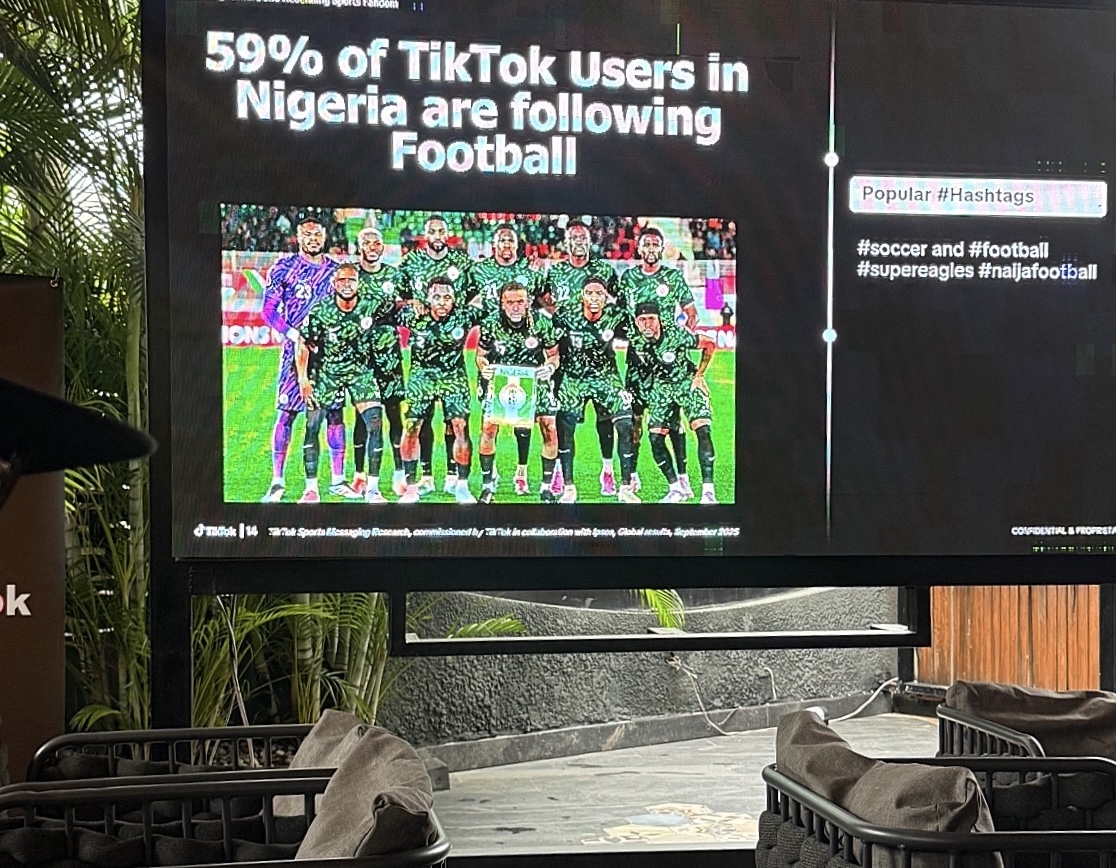
That link from content to action is paramount to TikTok’s sports strategy, especially as 42% of users who engage with sports content on the platform are more likely to tune into live matches afterwards. We could say from this, that discovery on TikTok functions as a gateway, rather than an endpoint.
But perhaps the most revealing part of the data is not just how people consume sport, but what they consume around it. With 66% of users engaging for entertainment and 50% for team support, the mix places sport firmly within entertainment culture rather than treating it as something separate or purely competitive.
This becomes more obvious when looking at the volume of activity. Every day, around 5 million sports-related posts are published globally on TikTok, feeding an ecosystem that now spans nearly 60 million sports creators.
That level of activity has allowed smaller voices to speak alongside mainstream coverage without needing traditional media approval or access.
Makgoba also pointed to the growth of unexpected categories such as sports medical creators. These are individuals who break down injuries and physical performance in ways that were previously limited to professional analysis rooms, but now circulate freely across the same feeds as match highlights and fan reactions.
It is in that mixture that TikTok sees its strongest disruption, not in replacing broadcasters, but in layering new forms of storytelling over existing ones. Here, analysis, humour, fashion, music and commentary all compete for the same attention window.
That layering is especially visible during global tournaments. The Paris 2024 Olympics, for instance, generated more than 1.9 million posts and 49 billion views across Olympic-related hashtags. Opening day alone saw over 43,000 creators posting content, a surge of more than 1,200% compared to Tokyo 2020.
This showed just how quickly sports moments now scale when they enter algorithm-driven distribution.
Looking at Africa’s football ecosystem, the expansion has gone beyond borders. During AFCON 2025, approximately 1.2 million posts were created globally, with 28.6% coming from sub-Saharan Africa. A significant engagement, however, also came from France, the United Kingdom, Germany, Italy and Spain.
This revealed that African football content is now being consumed in real time far outside the continent, not just after it has been broadcast.
Makgoba described this as cultural export, where sport is not only watched globally but interpreted globally through music, fashion and online conversation. This is specially as clips, chants and stadium moments travel faster than traditional match reporting ever could.
There is also a structural reason for that reach. TikTok does not operate as a follower-based network but more as a recommendation system.
Meaning content is distributed based on interest rather than audience size, ultimately allowing even small creators to achieve large-scale visibility if the content resonates.
Such structure is why sports content behaves differently on the platform, where a single reaction clip, analysis video or fan moment can travel far beyond its origin without relying on established media amplification.
Interestingly, TikTok is scaling beyond a viewing platform to a participation layer for sport itself, particularly through initiatives like “Game Plan”, developed in partnership with FIFA.
The initiative, created with a goal to turn interest into action, is designed to connect fans directly to teams, tickets, schedules and interactive experiences inside the app.
Someone watching a clip from a match can go on to join a fandom from passive consumption into direct engagement, where watching a clip can lead to buying a ticket, joining a conversation, or interacting with official content hubs in real time.
What emerges from all of this is not a replacement of traditional sport coverage, but a redistribution of where attention lives, and more importantly, who gets to enhance it.
The post Why 64% of Women Now Turn to TikTok for Sports Content appeared first on Tech | Business | Economy.









 English (US) ·