
 1 hour ago
1
1 hour ago
1
ARTICLE AD BOX


Happy new month. 
Nigeria’s healthtech sector has mobilised $271 million across 128 active startups, yet structural friction, including low electronic medical records (EMR) adoption and funding volatility, limits its durable impact. This report maps the required strategic actions for sustainable scale, going beyond deficits to offer a full roadmap for progress.
Read TechCabal Insights’ new State of Healthtech in Nigeria (2026).

Get smarter about Francophone Africa with our newsletter, Francophone Weekly—the startups, tech policies, and institutions building the pipelines for ecosystem growth.

Banking
Kenya’s I&M Bank spent $7.7 million to acquire major stake in its Tanzanian subsidiary
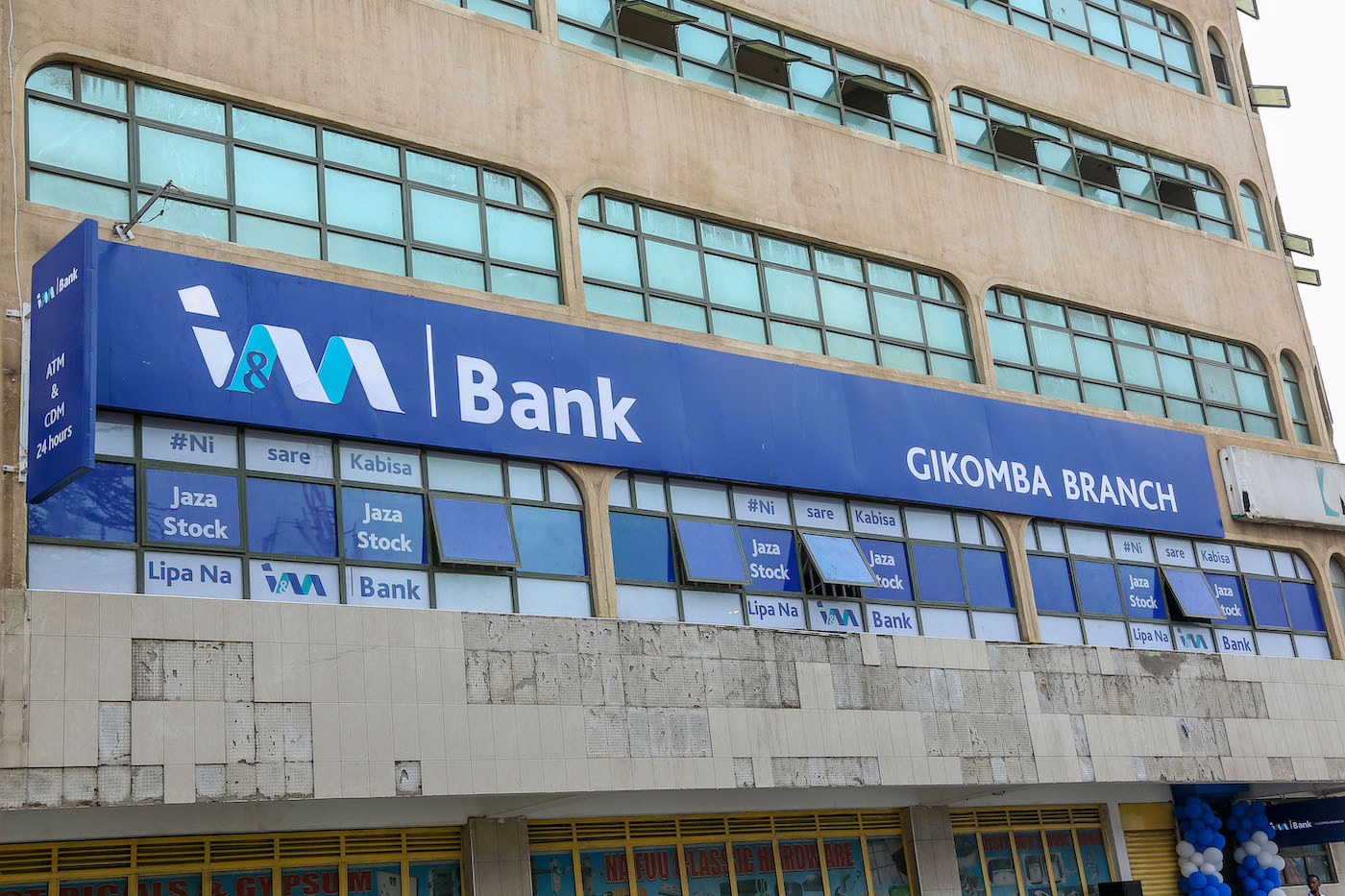 Image Source: TechCabal
I&M, a mid-tier Kenyan bank listed on the Nairobi Securities Exchange (NSE) and operating across five African markets, is putting its money where its mouth is. Fifteen years after buying into Tanzania with a 55% stake in a small bank, I&M now owns almost all of it.
In 2025, the lender spent KES1 billion ($7.7 million) to buy out two minority shareholders in its Tanzanian subsidiary and participate in a rights issue, lifting its ownership in I&M Bank Tanzania from 78.51% to 95.51%. PROPARCO, a French development finance institution (DFI), and Microfinance East Africa Limited sold their stakes to I&M and exited the subsidiary, making its Tanzanian operations a near wholly-owned subsidiary.
I&M is making bets across its East African operations. Beyond Kenya, the bank added 355 employees across the group in 2025, with the majority being in Kenya, where it opened 10 new branches and grew its customer base by 33% to nearly one million customers. It posted a 20.2% jump in net profit in Q1 2026. For a bank that has spent years as a mid-tier player with regional ambitions, the numbers are starting to look less mid-tier.
I&M is maturing as a regional leader. Buying out a DFI like PROPARCO is a rite of passage of sorts. DFIs typically come in early, provide patient capital and credibility, and exit once the business is profitable and self-sustaining enough to attract or self-fund growth.
I&M’s move to grow its stake in the subsidiary signals that it wants to benefit from more upside; for the bank, it is no longer a side project.


We Have Secured the Bank of Ghana EPSP Licence.
Fincra has officially secured its Enhanced Payment Service Provider licence. This regulatory milestone authorizes Fincra to directly collect, process, and settle payments in Ghanaian Cedis, offering a highly streamlined financial pipeline for businesses operating within the region. Start here.
Mobile Money
Nigeria’s Central Bank expands operating distance for PoS agents to 70 metres
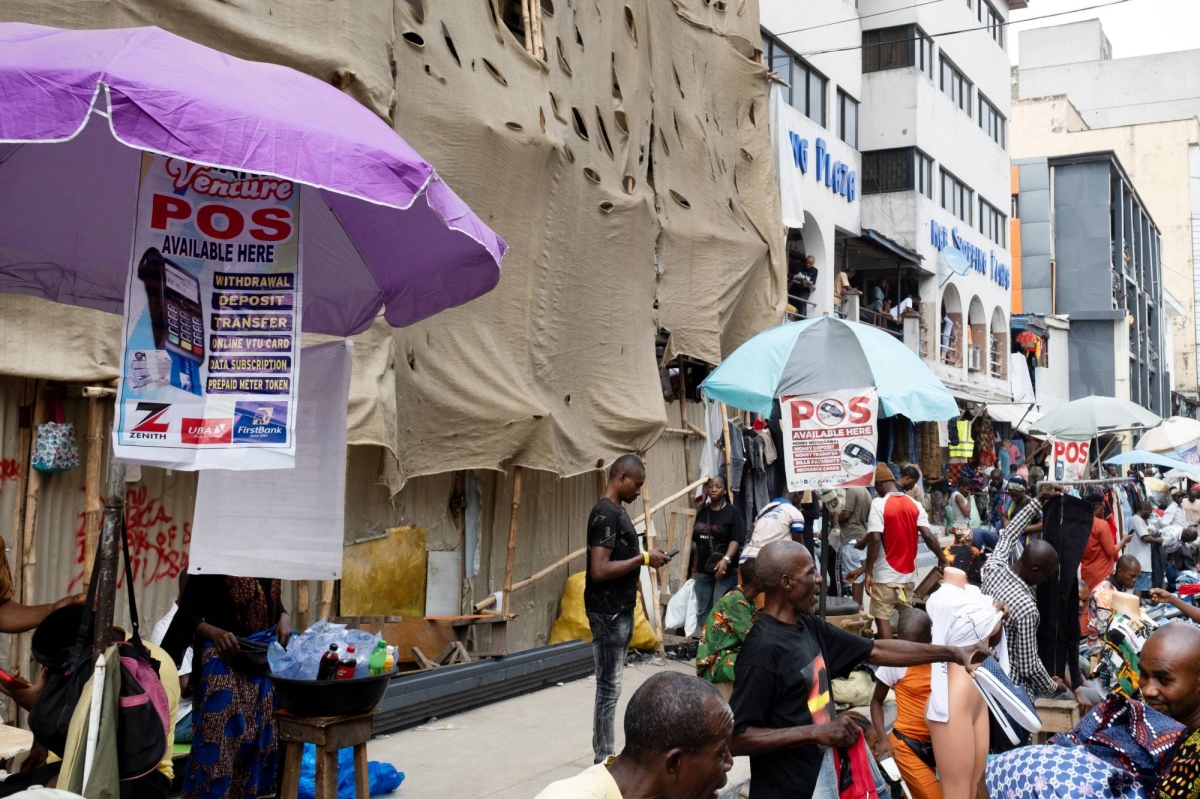 Image: Damilola Onafuwa/Bloomberg
After Nigeria’s 2023 cash crunch, where fintechs such as OPay and Moniepoint emerged, a contentious group that drove a major part of the informal financial economy’s growth has been the centre of attention for a while: Point of Sale (PoS) agents.
In August 2025, the Central Bank of Nigeria (CBN) issued a directive requiring all PoS terminals to be geo-tagged and tied to precise global positioning system (GPS) coordinates, with each device permitted to operate only within 10 metres of its registered address. That rule meant a terminal registered at a shop could not legally process a transaction if the agent stepped outside with it, thereby constraining agents’ mobility.
However, that changed on Friday. In a May 29 circular, the CBN expanded the permitted radius to 70 metres and pushed the enforcement deadline to August 1, 2026.
The 10-metre rule was about curbing fraud. Nigeria has about 1,600 PoS agents per square kilometre, and terminals have sometimes been moved to mask transaction origins and enable illicit activity. But the restriction created a compliance problem that had little to do with fraud in practice.
An agent moving 15 metres to serve a customer in a different part of the same market was technically in violation, while a bad actor could simply re-register a terminal at a new address and stay compliant on paper.
Zoom out: PoS transactions hit ₦10.51 trillion ($6.8 billion) in Q1 2025, up 301.67% from Q1 2024. At that scale, a geo-fencing policy that alienates the agents driving that growth is a policy that will keep getting revised. The 70-metre expansion buys the CBN time to design something more workable before August 1.
Naira Life 2026 is here!

Join 2,000+ in Lagos on August 22 for unfiltered wealth strategies, investment clinics, and real talk about building long-term financial power. Get 15% off early bird tickets.
Banking
Mauritius Commercial Bank to spend $1 billion in continental trade finance
 Image Source: MCB
Mauritius Commercial Bank (MCB), the country’s largest bank, has committed $1 billion over the next four years to expand its trade finance activity across the continent. The money will flow through credit facilities, letters of credit, guarantees, and other instruments that sit between a business and its ability to move goods across a border.
Africa’s trade finance gap is not a new problem. The African Development Bank (AfDB) estimated that between $74 billion and $92 billion worth of projects are underfunded; commercial banks have financed only 23% of the continent’s total trade between 2020 and 2024, down from 40% in the prior decade.
Foreign currency shortages are the primary culprit, with more than a third of banks citing it as their main constraint. MCB’s $1 billion commitment is a deliberate move into a space most of its peers are hesitant about.
MCB has skin in this game beyond goodwill. Trade finance is one of its biggest revenue drivers. MCB earned MUR 12.1 billion ($270 million) from fees, commissions, and trading activity in the year ended June 2025, about 31% of its total operating income of MUR 38.5 billion ($813.3 million), with trade finance among the activities contributing to that income.
The more trade flows it facilitates, the more it earns. MCB sees a continental gap; its move here is to risk it all on an opportunity most other banks won’t touch.
For the rest of Africa, the stakes are obvious. Behind every dollar of that $92 billion gap is a real business: a manufacturer that could not source raw materials, a farmer that could not get paid for an export shipment, an SME that lost a contract because it could not provide a letter of credit.
Development banks help, but they are slow, selective, and never enough. A commercial bank with the footprint, the expertise, and a financial incentive to close that gap is a different proposition entirely.
Ecommerce
SPAR is leaving the UK after trying to compete in the market for over 10 years
 Image Source: Tenor
In 2014, SPAR South Africa entered the United Kingdom (UK) market by acquiring a majority stake in BWG Group, which owned the Appleby Westward Group. Twelve years later, it has sold its UK business to family-owned British wholesaler A.F. Blakemore & Son for £7 million ($8.9 million).
The deal covers 71 company-owned stores and AWG’s logistics infrastructure in Plymouth, with 63 additional stores being handed to third-party operators by September 2026. SPAR retains its Irish operations, which it says are profitable.
SPAR’s disposal of its UK operations marks the end of a decade-long push to build an international footprint outside Southern Africa. What began as an expansion strategy aimed at diversifying earnings across Europe has instead become a costly retreat, with the retailer steadily unwinding overseas businesses that struggled to deliver sustainable returns.
The UK exit is the final chapter of one of the retailer’s costly international misadventures. In 2024, SPAR also sold its Polish business, paying R2.7 billion ($166.1 million) to recapitalise the operations before selling it for R185 million ($11.4 million). It then exited Switzerland in September 2025, paying R683 million ($42.11 million) in cash outflows to complete the disposal. In total, SPAR spent over R3.3 billion ($184 million) just to exit major European businesses.
Between the lines: While SPAR was bleeding capital into its European operations, its Southern African business was doing well. Its revenue grew 3.5% in H2 2025, the market it understood and underinvested in, while chasing a scale it never achieved abroad. SPAR CEO Angelo Swartz calls the European retreat a “reset in discipline.” Like several other South African retailers, including Pick n Pay and Shoprite, SPAR appears to be prioritising operations in its home market.
CRYPTO TRACKER
The World Wide Web3
Source:

 Bitcoin Bitcoin |
$73,404 |
+ 0.74 |
– 4.94% |
| Ether |
$2,006 |
+ 1.59% |
– 13.70% |
| XRP |
$1.30 |
+ 2.16% |
– 6.15% |
| Solana |
$81.77 |
+ 1.40% |
– 3.63% |
* Data as of 06.38 AM WAT, June 1, 2026.
JOB OPENINGS
- Big Cabal Media — Senior Motion Designer, YouTube Growth Strategist, Editor-in-Chief (TechCabal), Reporter, Enterprise & Policy, Editor (Analytical), Business Development Executive — Lagos, Nigeria
There are more jobs on TechCabal’s job board. If you have job opportunities to share, please submit them at bit.ly/tcxjobs.










 English (US) ·